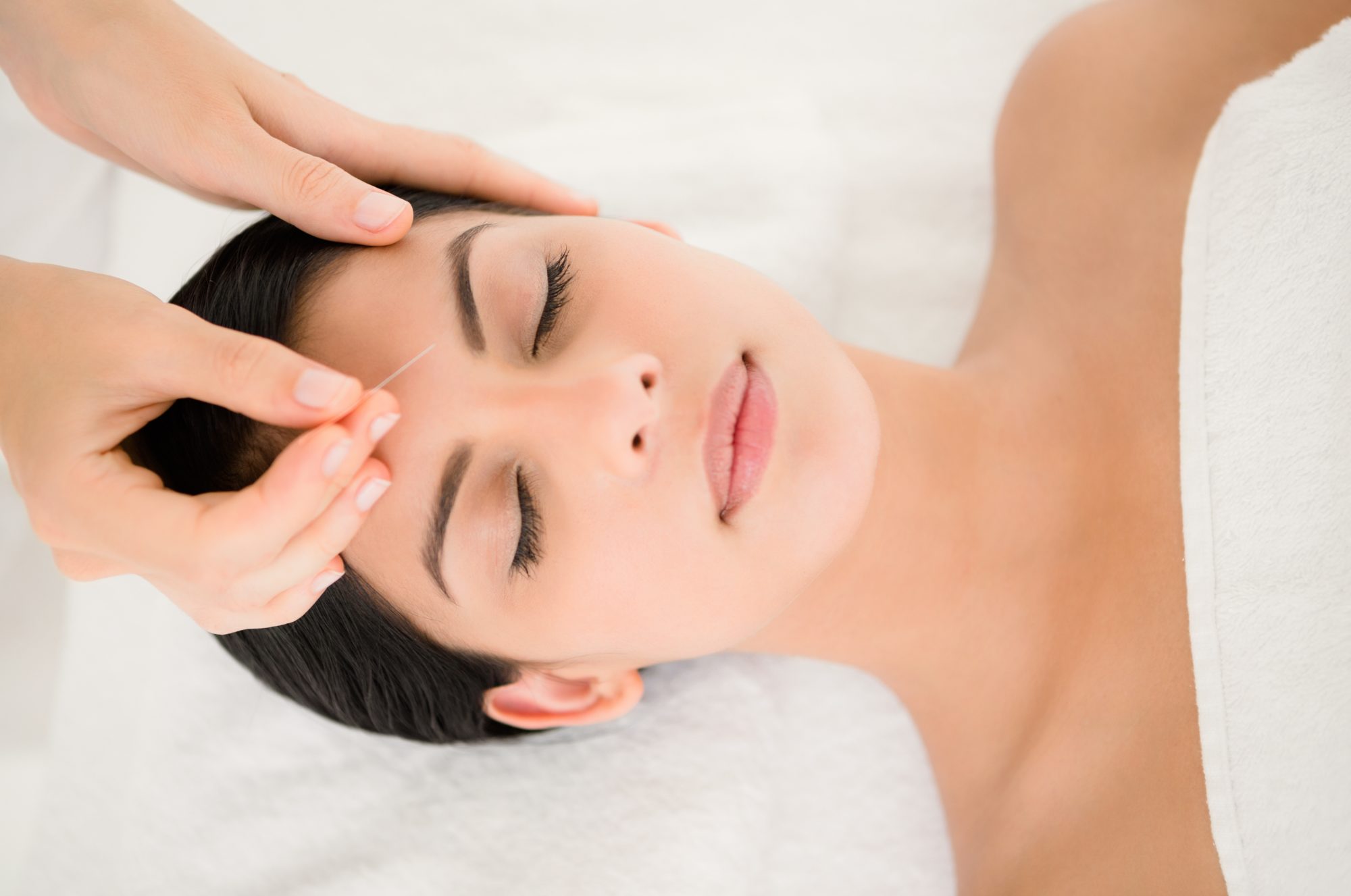
 “Explore the benefits of acupuncture for improving sleep quality and supporting people with sleep disorders such as insomnia, with natural and personalised solutions.”
Are you wondering why have acupuncture, in which situations it may be worthwhile, or what acupuncture can support? Rooted in Traditional Chinese Medicine, acupuncture offers a holistic approach that considers the person as a whole.
It can be used on its own or alongside medical care, depending on the reason for the visit and each person’s needs.
What is acupuncture?
Acupuncture is a Traditional Chinese Medicine practice that involves stimulating specific points on the body, in particular with fine needles.
Traditional Chinese Medicine views the body as a whole in which the different functions are interdependent. During a consultation, the aim is therefore to look not only at the symptom, but also at the general context in which it appears.
A session begins with a conversation to better understand your request, your general health, your sleep, your digestion, your stress levels and, where relevant, your menstrual cycle.
The treatment is then tailored to you.
Why have acupuncture?
There are many reasons to consult. Some people come for a specific problem, while others would like support during a particular period of their life.
Acupuncture may be considered in particular to support:
- stress and periods of tension;
- sleep difficulties;
- certain types of pain;
- certain functional digestive disorders;
- discomfort linked to the menstrual cycle;
- premenstrual syndrome;
- endometriosis, alongside its medical treatment;
- a fertility or assisted reproduction (ART) journey;
- pregnancy and the postpartum period;
- perimenopause and menopause.
It is important to remember that acupuncture does not replace a medical diagnosis or treatment when these are needed.
Acupuncture and stress
Stress can show itself in different ways: physical tension, difficulty falling asleep, fatigue, a feeling of not recovering enough, or digestive discomfort.
Acupuncture may be offered as a complementary approach during periods of stress or overload.
The session is also a chance to take some time for yourself and to receive holistic care, adapted to each person’s situation.
Acupuncture and sleep
Sleep difficulties can take different forms: trouble falling asleep, waking in the night or unrefreshing sleep.
In Traditional Chinese Medicine, sleep is taken into account in the overall assessment of the person.
An acupuncture consultation may therefore be considered to support sleep problems, particularly when they arise in a context of stress, fatigue or hormonal changes.
In the case of persistent or severe insomnia, it is also advisable to look for a possible medical cause with a healthcare professional.
Acupuncture and women’s health
Women’s health holds an important place in my practice.
Acupuncture and Traditional Chinese Medicine can support different stages of a woman’s life:
The menstrual cycle
Some women consult for period pain, premenstrual syndrome or various discomforts associated with the cycle.
Acupuncture can then be part of a holistic approach to care.
Endometriosis
Endometriosis can have a significant impact on quality of life.
Acupuncture can be used as a complementary approach to support certain symptoms, in particular pain or fatigue.
It does not make endometriosis lesions disappear and does not replace gynaecological follow-up.
Fertility and assisted reproduction
Some women would also like acupuncture support during a fertility journey or assisted reproduction (ART).
In this context, the aim is to offer complementary support, in coordination with the medical pathway and the professionals overseeing it.
Pregnancy and postpartum
Pregnancy brings many physical and emotional changes.
Acupuncture may be considered in certain situations during pregnancy, with care adapted to the stage of pregnancy and to each woman’s situation.
After the birth, it can also support the postpartum period.
What are the benefits of acupuncture?
People often search online for “acupuncture benefits” or “does acupuncture work?”.
The answer depends a great deal on the reason for the visit and on the person.
Acupuncture has been studied for many indications, with levels of evidence that vary from one condition to another. It should therefore not be presented as a universal solution.
Its value may lie in particular in an individualised and complementary approach, especially when several factors contribute to a discomfort.
The aim of a consultation is above all to understand your situation and to offer appropriate support.
What does acupuncture treat?
People often ask: “What does acupuncture treat?”
It is more accurate to talk about what acupuncture can support, because it does not replace medical treatment and should not be presented as able to cure every illness.
It can in particular be part of the support for certain types of pain, stress, sleep problems, certain functional disorders and various issues related to women’s health.
If symptoms are new, severe or persistent, medical advice is essential.
What happens during an acupuncture session?
The first part of the consultation is devoted to conversation.
I ask about the reason for your visit, but also about different aspects of your daily life: sleep, digestion, diet, stress levels, menstrual cycle where relevant, medical history and how your symptoms have changed.
This approach gives a more complete picture of your situation.
The acupuncture session is then adapted to your needs. The needles used are very fine and the points are stimulated in line with hygiene and safety rules.
The length and frequency of sessions depend on the reason for the visit and on your progress.
Acupuncture or osteopathy: which approach should you choose?
Acupuncture and osteopathy are two different approaches.
Osteopathy looks in particular at the mobility of the body’s different structures and at the tensions that may contribute to certain discomforts.
Acupuncture belongs to the approach of Traditional Chinese Medicine and uses the stimulation of specific points on the body.
In some cases, the two approaches can complement each other. The choice depends on the reason for your visit and on your needs.
Why consult for acupuncture in Aix-en-Provence?
If you are looking for acupuncture in Aix-en-Provence, I offer consultations with a personalised approach in Traditional Chinese Medicine.
My practice focuses particularly on women’s health, with support available around the menstrual cycle, endometriosis, fertility, pregnancy, the postpartum period and menopause.
Acupuncture can also be offered to support stress, sleep, certain types of pain and various functional disorders.
Each consultation is adapted to the person and their situation.
Book an appointment
Would you like to know whether acupuncture may suit your situation?
A first consultation is an opportunity to review your request and determine the most appropriate approach.
Acupuncture and Traditional Chinese Medicine consultations in Aix-en-Provence.
FAQ: Acupuncture
Does acupuncture work?
The effectiveness of acupuncture varies with the reason for the visit. The scientific data are more or less favourable depending on the indication. It can be used as a complementary approach and does not replace necessary medical treatment.
Does acupuncture hurt?
The needles used in acupuncture are very fine. The sensation varies from person to person and with the points stimulated. Some people feel a slight sensation when the needle is inserted.
How many acupuncture sessions are needed?
There is no number of sessions that is the same for everyone. The frequency depends on the reason for the visit, how long the problem has been present and the progress observed from one session to the next.
Can acupuncture be used for stress?
Yes, acupuncture may be offered as a complementary approach during periods of stress or tension, particularly when these come with sleep difficulties or other discomforts.
Can you have acupuncture during pregnancy?
Acupuncture may be considered in certain situations during pregnancy, with appropriately adapted care. It never replaces medical, obstetric or midwife follow-up.
Can acupuncture support endometriosis?
Yes, it can be used as a complementary approach to support certain symptoms of endometriosis, in particular pain. It does not treat the lesions and does not replace gynaecological follow-up.
Where can you have acupuncture in Aix-en-Provence?
I offer acupuncture and Traditional Chinese Medicine consultations in Aix-en-Provence, with an approach focused particularly on women’s health.