
Anxiety is a feeling that covers several emotional disorders, sometimes including panic attacks and phobias.
Some experts believe that biological and psychological links may be the cause of the problem.
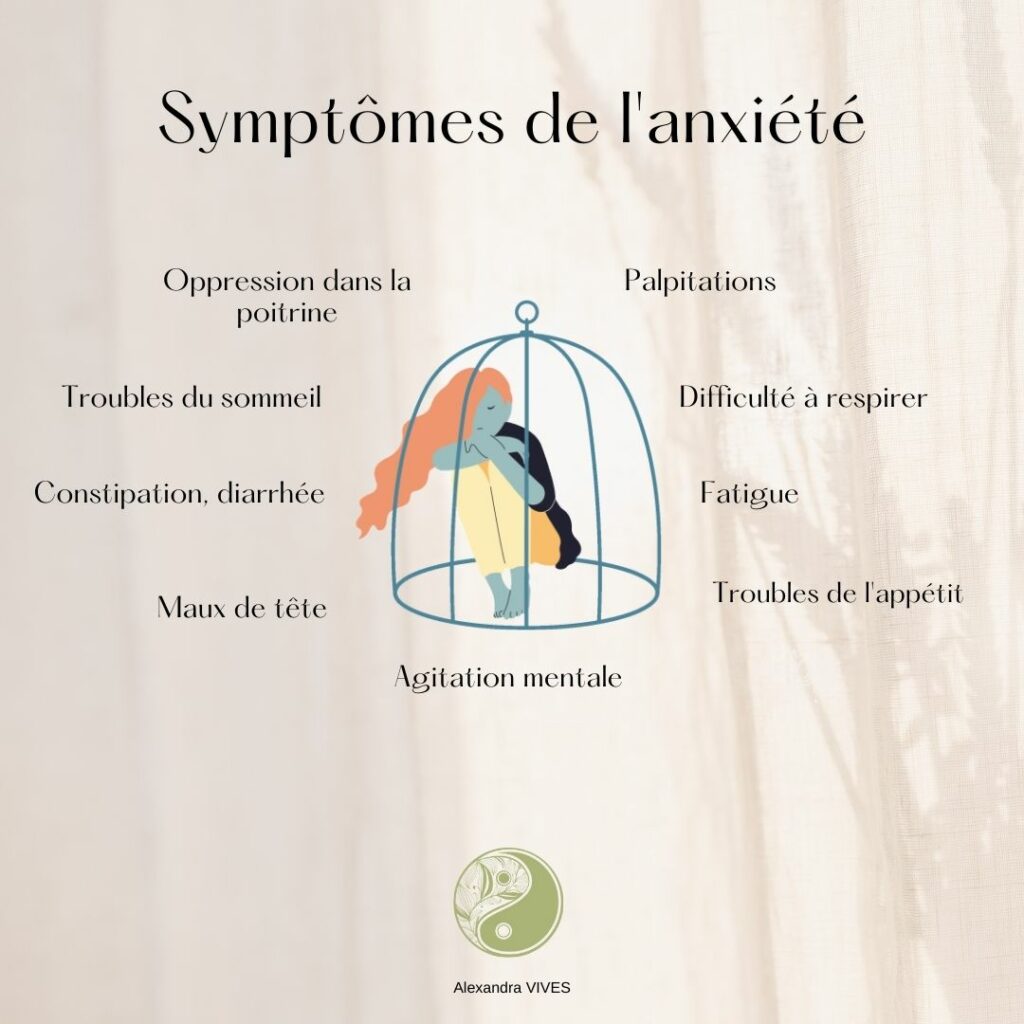
The main symptoms are sleep disorders (insomnia), excessive tension and nervousness.
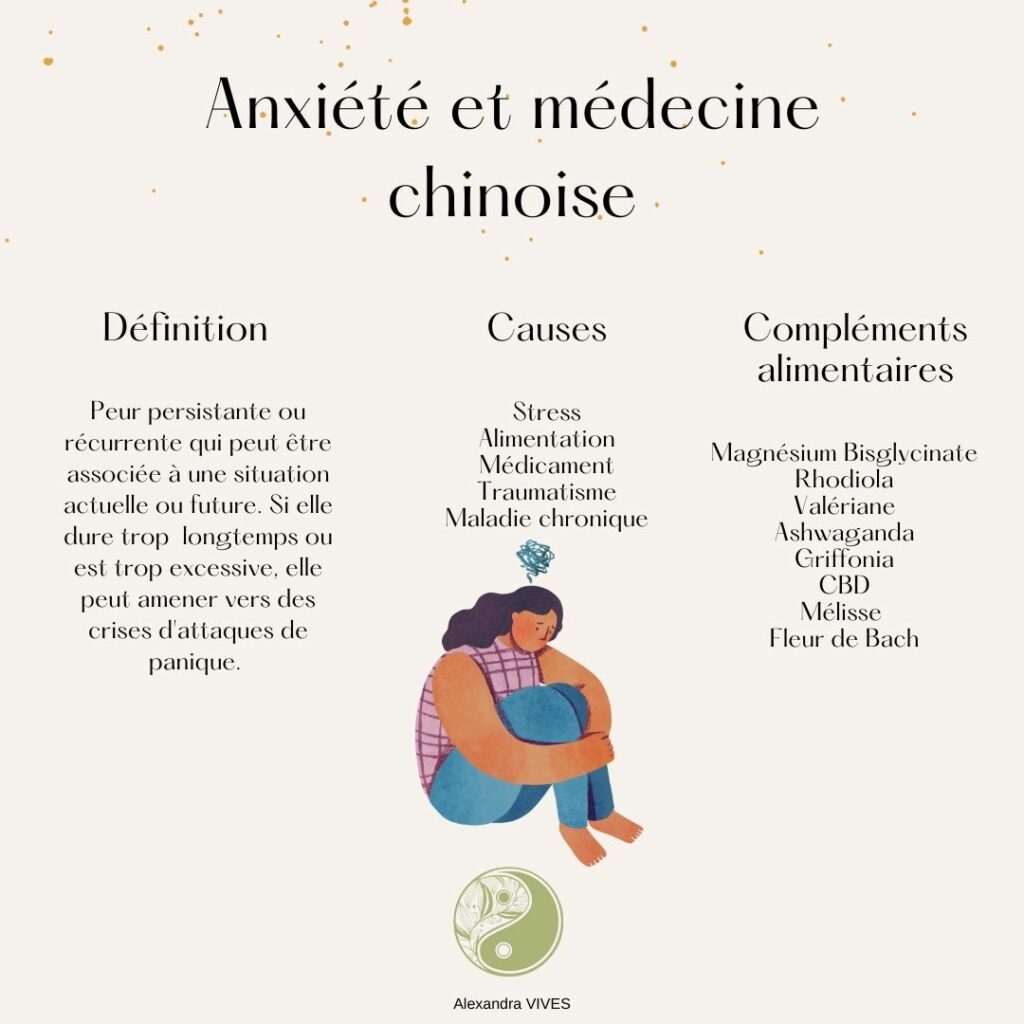
If you experience prolonged or overly intense anxiety with symptoms that disrupt your everyday life, see your doctor.
The food supplements are given here for information only and in no way replace a medical diagnosis. Always ask your doctor or pharmacist for advice in order to avoid drug interactions or contraindications.
Diet and anxiety
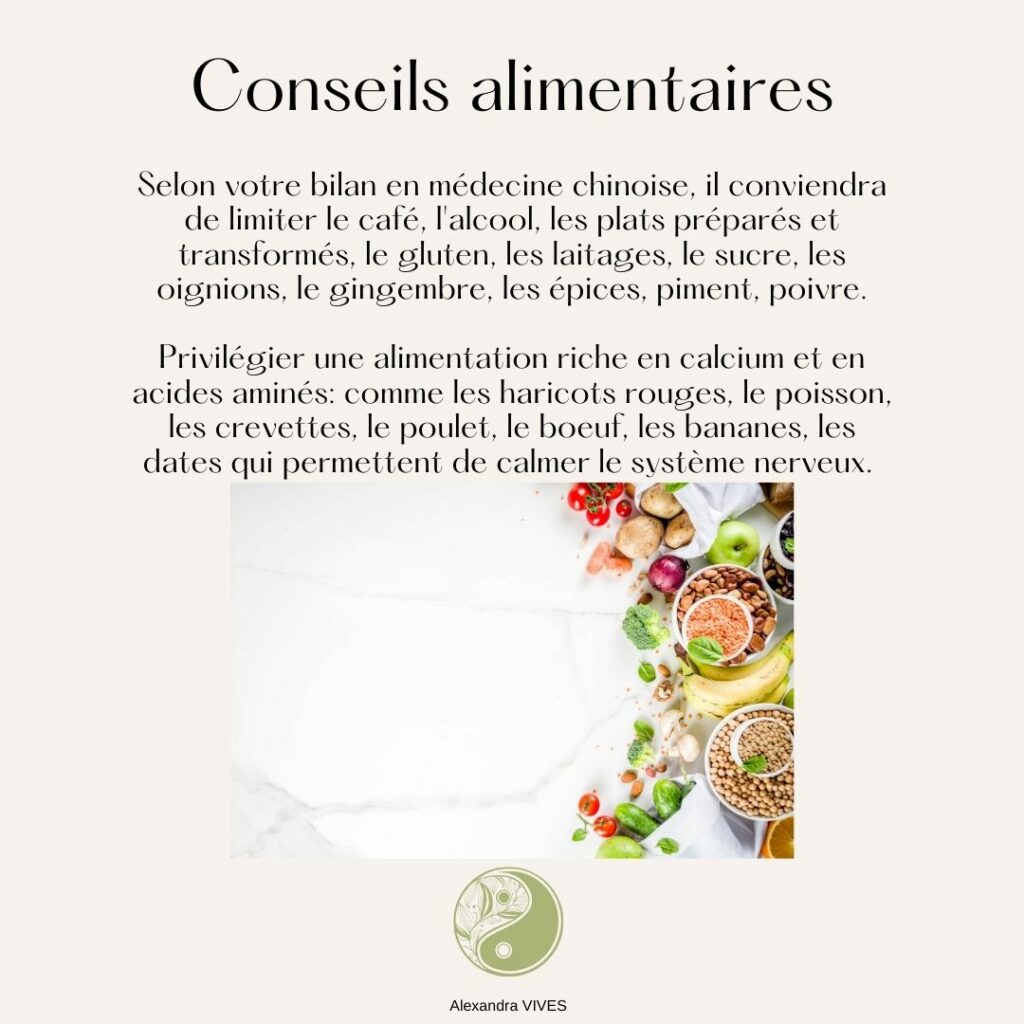
In general, it is good to eat:
-Fish: carp, trout, sole, pollock, salmon, tuna, seafood (oysters, mussels, prawns, crab)
Cereals and pulses: wheat germ, rye bread, beans (haricot, kidney, green), lentils, maize, barley, rice, sesame.
Vegetables: artichoke, aubergine, avocado, Swiss chard, beetroot, carrot, celery, squash, courgette, pumpkin, chicory, spinach, lamb’s lettuce, turnip.
Fruit: apricot, lemon, orange, mandarin, date, fig, melon, pomegranate, watermelon, pear, apple, grapes.
Meat and cured meats are too stimulating and harmful in cases of distress and anxiety, except duck and chicken.
Conversely, some foods will make the symptoms worse, such as sweets, refined and sugary processed products (biscuits, fizzy drinks), fatty and fermented cheeses, and too much chocolate, coffee and tea. Limit alcohol.
Garlic is an excellent ally when cooking dishes, as it improves the general circulation of blood and energy.
Eating hazelnuts, chestnuts or walnuts several times a day may help to offset the effects of stress.
Anxiety: what can you do?
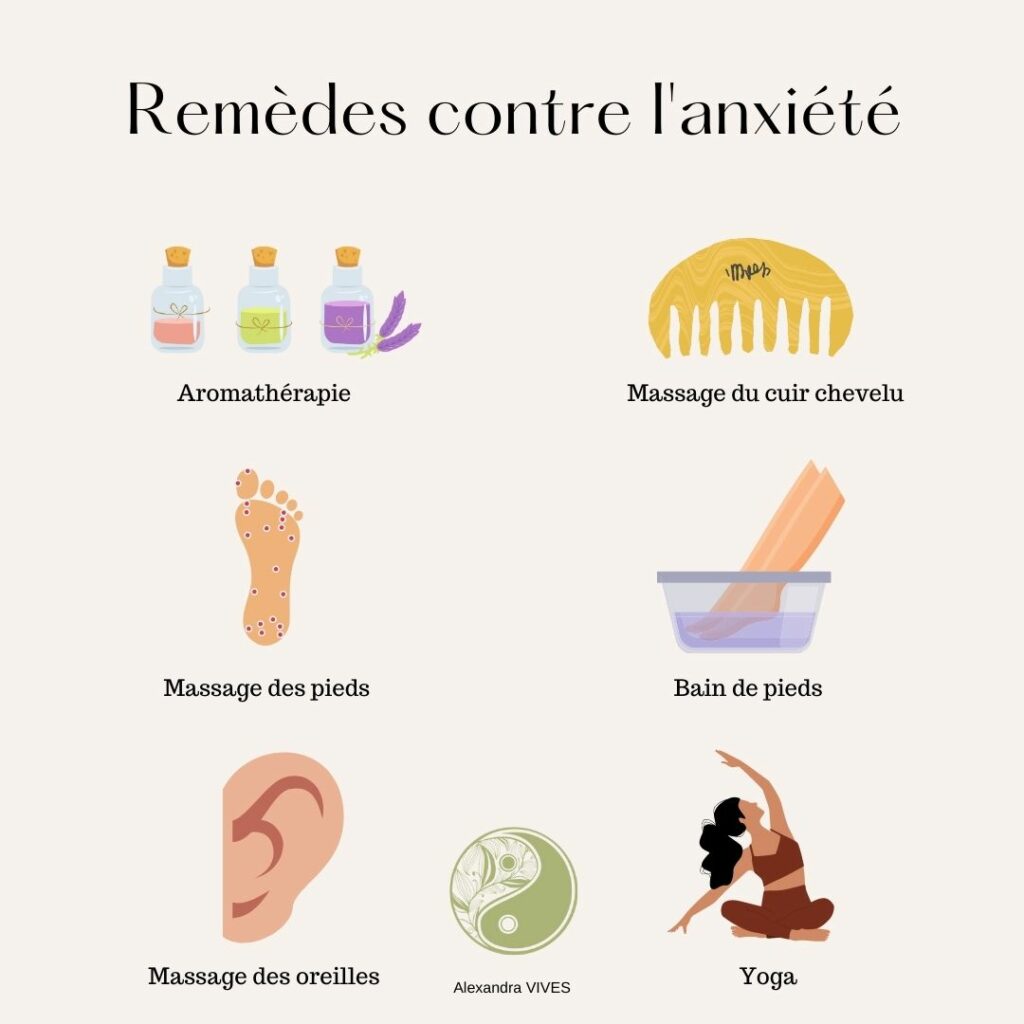
Creating a routine may help to improve the symptoms, for example massaging the areas that reduce tension (the head, the ears and the feet).
Practise a gentle activity such as yoga, stretching, meditation, Qi Gong or Tai Chi.
Taking a foot bath with essential oils for about 20 minutes in the evening may promote better sleep.