
Bruxism in Aix-en-Provence: stress, jaw and neck pain, what can you do?

Do you often have a stiff neck?
Migraines at the end of the day or when you wake up in the morning?
The feeling that you clench your teeth without realising it?

These symptoms are often linked.
What do they have in common? Stress and the jaw.

In Aix-en-Provence, more and more patients come in for chronic neck pain… which actually originates in the temporomandibular joint (TMJ).


Stress acts directly on the jaw

When we are stressed, our nervous system switches into “alert” mode.

The body tenses up:

  • Tight shoulders
  • Stiff neck
  • Shallower, higher breathing
  • Unconscious teeth clenching

This repeated clenching can lead to what is called bruxism (grinding or clenching of the teeth, often at night).

Over time, the chewing muscles become hypertonic and create permanent tension around the TMJ.


Why does the jaw cause neck pain?

The temporomandibular joint is directly connected:

  • to the suboccipital muscles
  • to the upper cervical spine
  • to the trapezius muscles
  • to the postural chains

A tense jaw leads to postural adaptation.

The usual pattern is:

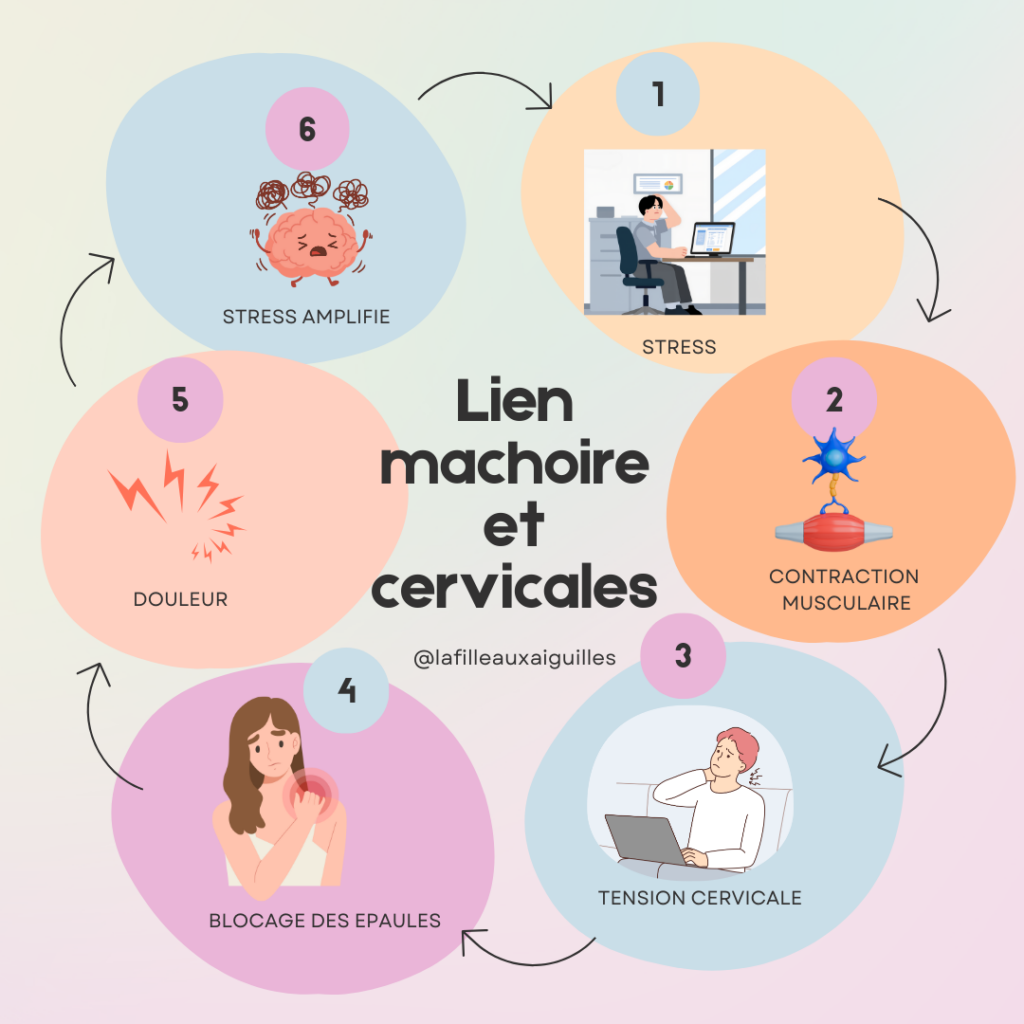
Stress → Jaw contraction → Neck tension → Locked shoulders → Tension migraines

This is why treating only the neck without working on the jaw sometimes gives partial results.

Common symptoms linked to bruxism

You may be affected if you have:

  • Chronic neck pain
  • Migraines or band-like headaches
  • A feeling of pressure in the head
  • Clicking in the jaw
  • Tiredness on waking
  • Tooth sensitivity
  • Constantly tight shoulders

In Aix-en-Provence, these symptoms are very common among people under stress, remote workers and people with a heavy mental load.


Why a targeted approach matters

When stress is chronic, tension becomes automatic.

Specific work on:

  • the temporomandibular joint
  • the chewing muscles
  • the cervical spine
  • the cervical fascia

may allow a deeper and longer-lasting release.

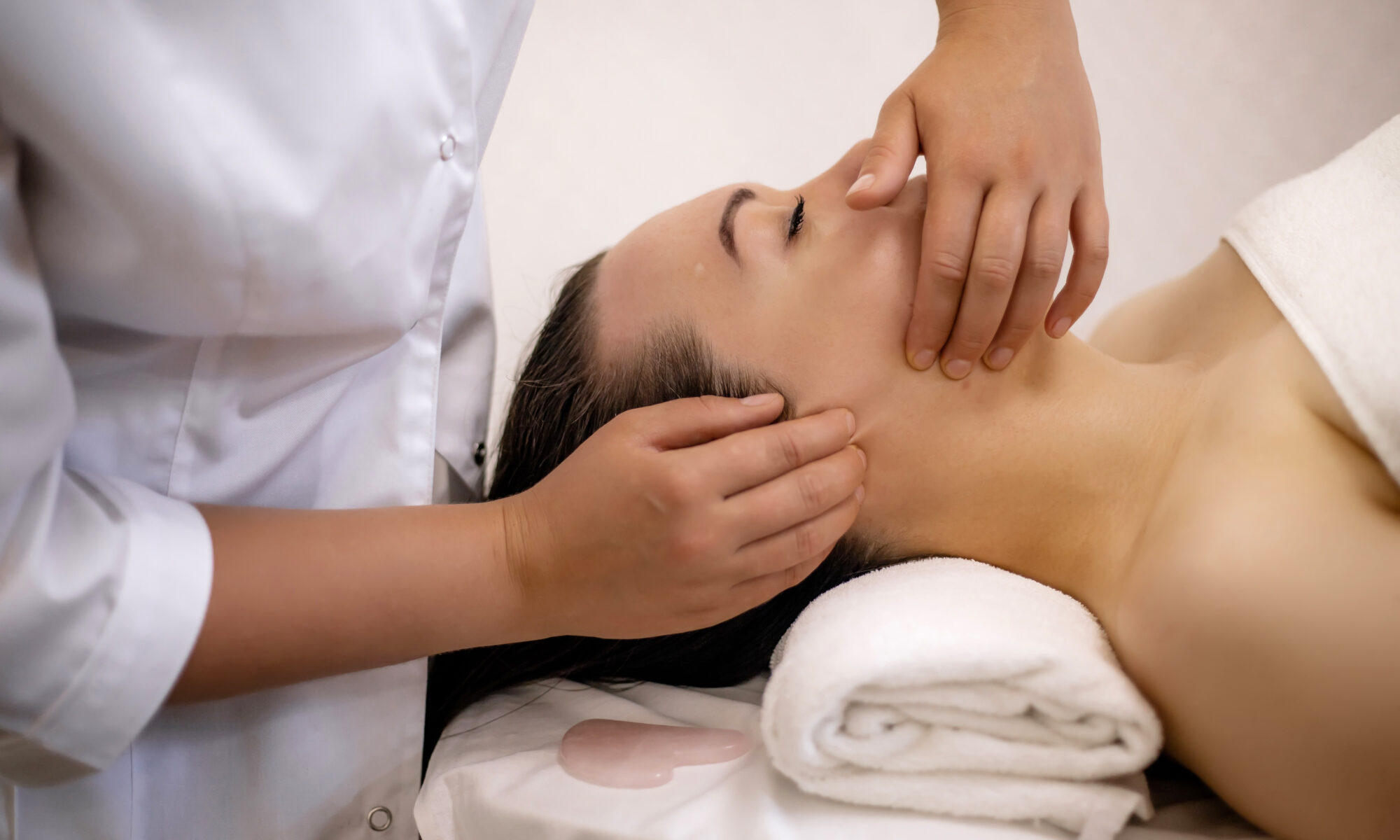
With this in mind, I have developed a specific protocol for jaw and neck tension at my osteopathy practice in Aix-en-Provence.

👉 Discover the Jaw & Neck Protocol


The role of intra-oral techniques

In some cases (established bruxism, deep tension), gentle intra-oral work may be offered.

It acts directly on the muscles responsible for teeth clenching and gives a more precise release.

These techniques are always explained and carried out with consent.


Can this pain really be reduced?

When neck pain is linked to jaw tension, appropriate care may bring:

  • fewer migraines
  • improved neck mobility
  • relaxed shoulders
  • an overall feeling of calm

The aim is not only to “release a blockage” but to reduce the stress → contraction → pain loop.


In summary

If you suffer from:

  • Bruxism
  • Neck pain
  • Tension migraines
  • Stress-related shoulder tension

The jaw may be a key factor.

A targeted osteopathic approach may make it possible to act at the source.

📍 Osteopathy practice in Aix-en-Provence
(consultations also in Cadenet)

👉 Book a session or discover the specific Jaw & Neck protocol
migraine and acupuncture

migraine and acupuncture

The effects of acupuncture on migraines: a natural, complementary approach

Migraines affect almost 15% of the world’s population, with intense pain often accompanied by nausea, vomiting and sensitivity to light or noise. While medication brings some relief, it does not work for everyone and can cause unwanted side effects. Acupuncture, an approach rooted in Traditional Chinese Medicine, is now the subject of a great deal of research on migraines. But how does it act on these headaches? What do scientific studies say? Let’s take a closer look.


How does acupuncture act on migraines?

Acupuncture is based on the idea that the human body is crossed by flows of energy, called “Qi” (pronounced “chee”), which circulate in specific channels called meridians. A disturbance or blockage in these flows can lead to various disorders, including migraines.

From a scientific point of view, here are the main mechanisms by which acupuncture may act on migraines:

  1. Stimulation of the nervous and hormonal systems:
    By inserting needles at strategic points, acupuncture triggers the release of neurotransmitters such as endorphins and serotonin. These natural substances play a key role in managing pain and emotions, which may reduce sensitivity to migraines.
  2. Reduced inflammation:
    Acupuncture may reduce inflammatory markers in the body and help to lower the frequency and intensity of migraines.
  3. Improved blood flow to the brain:
    By promoting better blood supply to the tissues, it may help to relieve tension and limit the vascular spasms often associated with migraines.
  4. Regulation of the autonomic nervous system:
    This system controls involuntary functions such as blood pressure and heart rate. Acupuncture helps reduce stress and rebalance the body’s responses, two factors closely linked to migraines.

What studies say about acupuncture

A great deal of research has looked at acupuncture in the management of migraines, with encouraging but still limited results. Here are some recent studies:

  • A study published in The BMJ (British Medical Journal) reportedly followed 500 patients with chronic migraines. Participants who received 12 acupuncture sessions over three months are said to have reported a 60% reduction in the frequency of their attacks, compared with 30% in the control group who received a placebo.
  • A systematic review carried out by Cochrane in 2020 suggests that acupuncture may be more worthwhile than standard drug treatments for reducing migraine pain and improving patients’ quality of life.
  • Some studies suggest an improvement in patients who followed a course of 8 to 10 sessions.

Testimonials and real results

Beyond the scientific data, patient testimonials bring a human and encouraging perspective. Claire, a patient who has had chronic migraines for 15 years, shares her experience:
“After my third session, I noticed a decrease in the intensity of my migraines. Within a few months, they went from once a week to once a month, and the pain is much less disabling.”


How many sessions are needed?

The number of acupuncture sessions depends on the severity of the migraines and the patient’s medical history. In general, an initial course of closely spaced sessions is recommended. Maintenance sessions may be needed to keep the benefits in the long term.


Why choose acupuncture?

Acupuncture has several advantages for people with migraines:

  • Natural and non-invasive: No chemical substances or major procedures are involved.
  • Compatible with other treatments: It can be used alongside medication or physical therapies.
  • Uncommon and usually mild side effects: Unlike painkillers or preventive treatments, acupuncture performed by a trained practitioner does not usually cause fatigue, stomach problems or dependence.

Conclusion

Acupuncture offers a valuable complement to conventional migraine treatments. By acting on both the underlying causes and the symptoms, it may help to improve quality of life. Studied with encouraging but still limited results and backed by positive testimonials, this age-old method deserves consideration by anyone looking to take back control of their health.

Do not hesitate to consult a qualified acupuncturist to assess whether this approach may suit you. You may well find in these fine needles a key to finally relieving your migraines.

Acupuncture

acupuncture
what is acupuncture?

Acupuncture (sometimes spelt “acuponcture” in French) is a very old therapeutic method, born in China 5,000 years ago, which regulates the body by means of needles placed in the skin at precise acupuncture points.

Acupuncture is based on the concept of vital energy and the theory of yin and yang. A state of balance defines good health.

Sometimes, internal or external aggressions disturb this balance, such as climatic changes (cold, heat, wind, dryness, trauma, infection) or eating too little or too much, dietary mistakes, excess or lack of emotions (anger, fear, sadness).

The imbalance may be temporary if the body has good immunity or if the pathogen is eliminated. Otherwise, the imbalance leads to the dysfunction of an organ, which in turn leads to the onset of an illness.

First and foremost preventive, acupuncture’s role is to maintain good health. It is also curative as soon as symptoms appear. It is advisable to have a session every 4 months, that is, at each change of season. This makes it possible to anticipate certain symptoms, such as allergies for example, or to prevent certain illnesses by boosting immunity.

According to Traditional Chinese Medicine, vital energy depends on the quantity and quality of the air we breathe, on diet, on managing emotions as well as on mental and sexual stimulation and on solar radiation.

Migraine

migraine with or without aura

As a former migraine sufferer, I managed to get rid of my migraines with natural care. I was on beta blockers and another neurological medication, but nothing worked. 

Today I support patients suffering from migraines. Some patients had had migraines for more than 20 years.

For migraines or  headaches, the first treatment offered is unfortunately still  anti-migraine medication. However, some studies suggest that medications for migraines (paracetamol, Lamaline,  beta blockers,  ibuprofen) may be effective only for a short time. And they can have long-term side effects.

Often, for headaches or migraines, we ask patients to keep a diary or to change their lifestyle. Some therapies, such as relaxation and cognitive behavioural therapy, can improve them. 

meditation yoga migraine

Taking coenzyme Q10 is reported to significantly reduce the frequency of migraines. Magnesium is reported to be effective in teenage girls who suffer from migraines during menstruation (catamenial migraines).

As for homeopathy, no reliable study shows whether or not it is effective on migraines, in the short or long term, for this chronic condition.

acupuncture migraine
acupuncture and migraine

Acupuncture and the management of migraines

There are a great many studies on acupuncture and migraines. Some studies suggest that acupuncture may have an effect comparable to that of medication. Its side effects are uncommon and usually mild when performed by a trained practitioner. Other studies suggest that a course of acupuncture sessions may have an effect close to that of beta blockers. Of course, it is the patient’s choice to opt for such support, alongside medical care.

Acupuncture may help relieve and/or prevent migraines with or without aura, thanks to its pain-relieving effect. Some study data suggest a change in brain biochemistry linked to migraines after acupuncture treatment. It may contribute to a reduction in the frequency of attacks as well as a decrease in the intensity of pain.

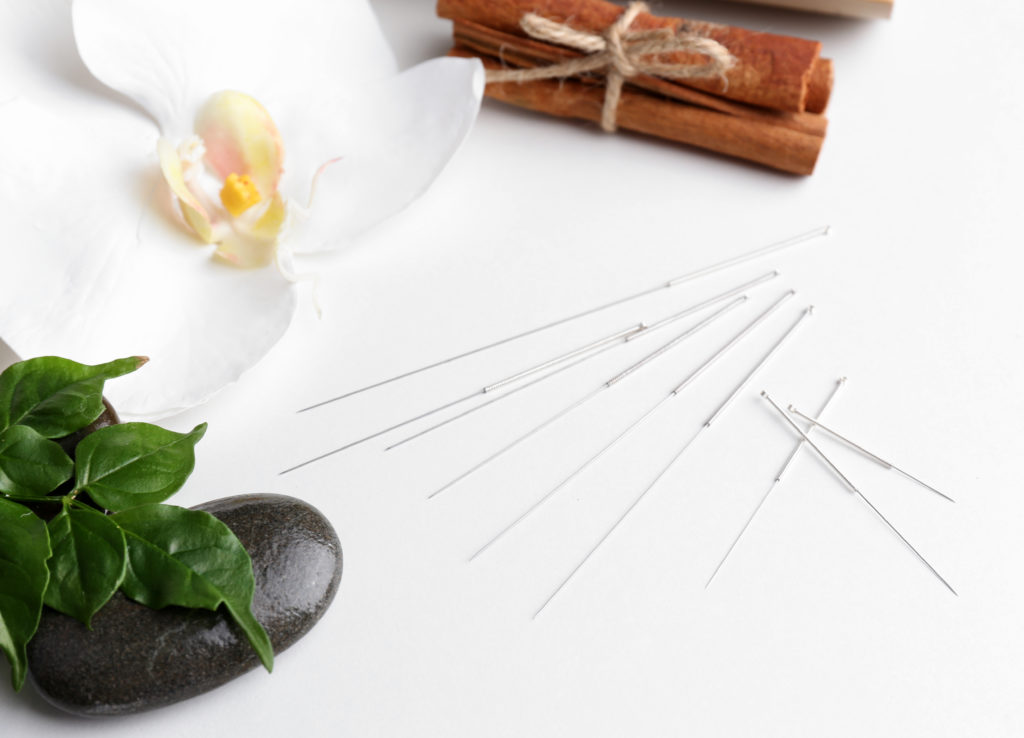
During treatment, sterile single-use needles are inserted into acupuncture points along the meridians. The treatment is painless.

Acupuncture has also been the subject of studies with encouraging but still limited results for tension headaches, back pain (neck pain) and shoulder pain. Acupuncture may therefore be worthwhile alongside medical care.

migraine and osteopathy

Osteopathy: an appealing method for managing migraines

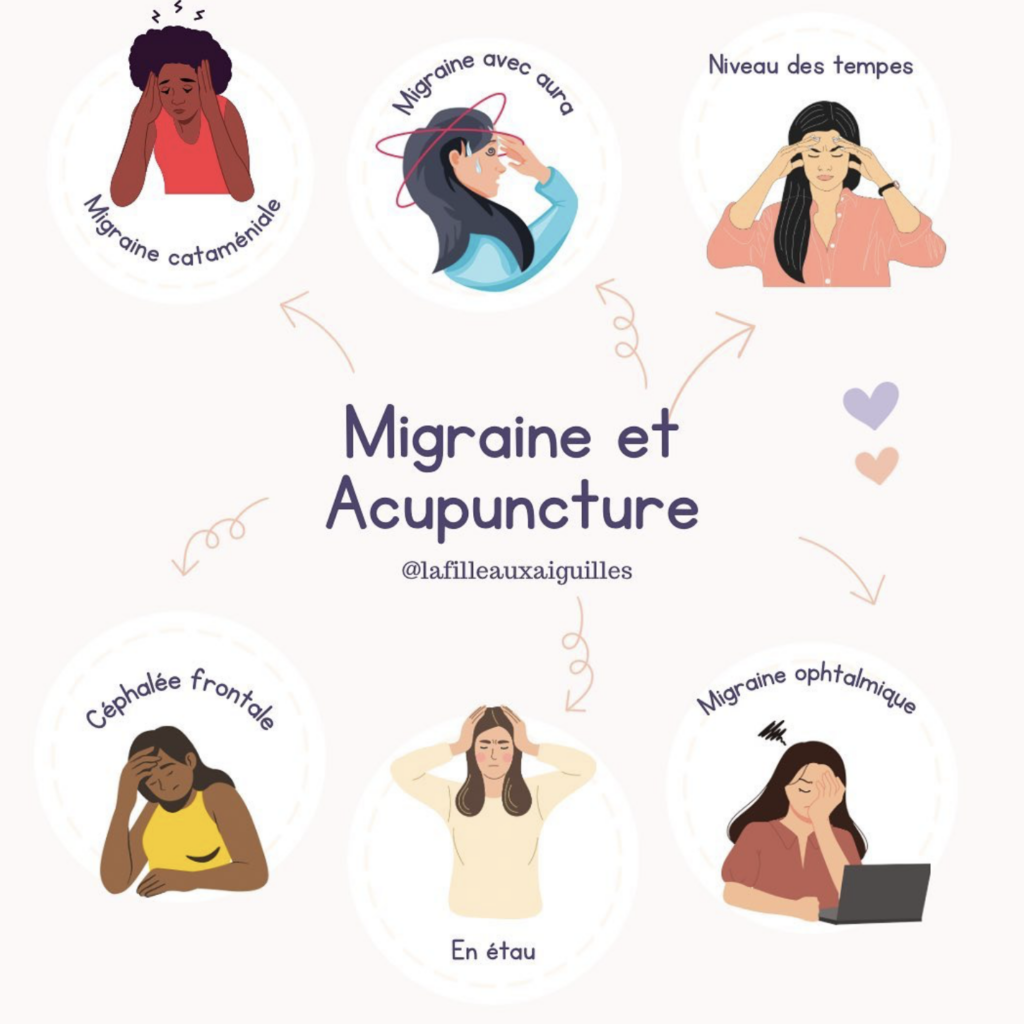
Osteopathy is also of interest for occipital (Arnold’s) neuralgia, tension headaches, ophthalmic migraines and migraines during menstruation. Other  symptoms and clinical signs  are explored, such as vomiting, nausea, abdominal pain (liver, spleen, stomach), high blood pressure, eyesight problems (unsuitable glasses), migraines that come on at night, on waking in the morning or in the evening, dizziness, allergy, diarrhoea, back pain, chronic illness, hormones, sinusitis, stress, and tension in the jaw. The causes are many. Osteopathy and/or acupuncture seek to identify the cause(s) in order to support patients with migraines, which are often disabling. Massage of the head, neck and shoulders may reduce tension headaches, for example. Indeed, there are different causes of migraines: eyesight problems, high blood pressure, digestive origin, cervical origin, heat, cold, fatigue.  

At my practice I offer osteopathy or acupuncture, or I can combine both in the same session.

https://www.ncbi.nlm.nih.gov/pmc/articles/PMC3291665/

https://www.ncbi.nlm.nih.gov/pubmed/30007828

Menopause in Chinese medicine

menopause, menstrual cycle, acupuncturist Aix-en-Provence
menopause in Chinese medicine

In Chinese medicine, menopause is seen as a real liberation for women. If it is well prepared for, the transition goes smoothly.

Some women experience symptoms such as hot flushes, night sweats, reduced libido, dryness, headaches, insomnia, heart palpitations, digestive problems or low moods. Joint pain may also be present as a result of bone demineralisation.

Acupuncture may ease these symptoms by regulating the circulation of blood and energy.

It is also possible to regulate menstrual cycle problems (cycles that are too long or too short) for a few months or years.

By restoring harmony on a physical and mental level, women can respond positively to this new stage of life and reach a new maturity and self-confidence, to feel more at ease in their natural and social environment.

Menopause does not mean old age. Indeed, many women know how to maintain a lovely body and a beautiful face well beyond menopause.

To book an appointment with an acupuncturist in Aix-en-Provence or Cadenet, go to Doctolib

Yintang

YinTang or third eye point for insomnia anxiety depression
yintang point

Origin of the Yintang point

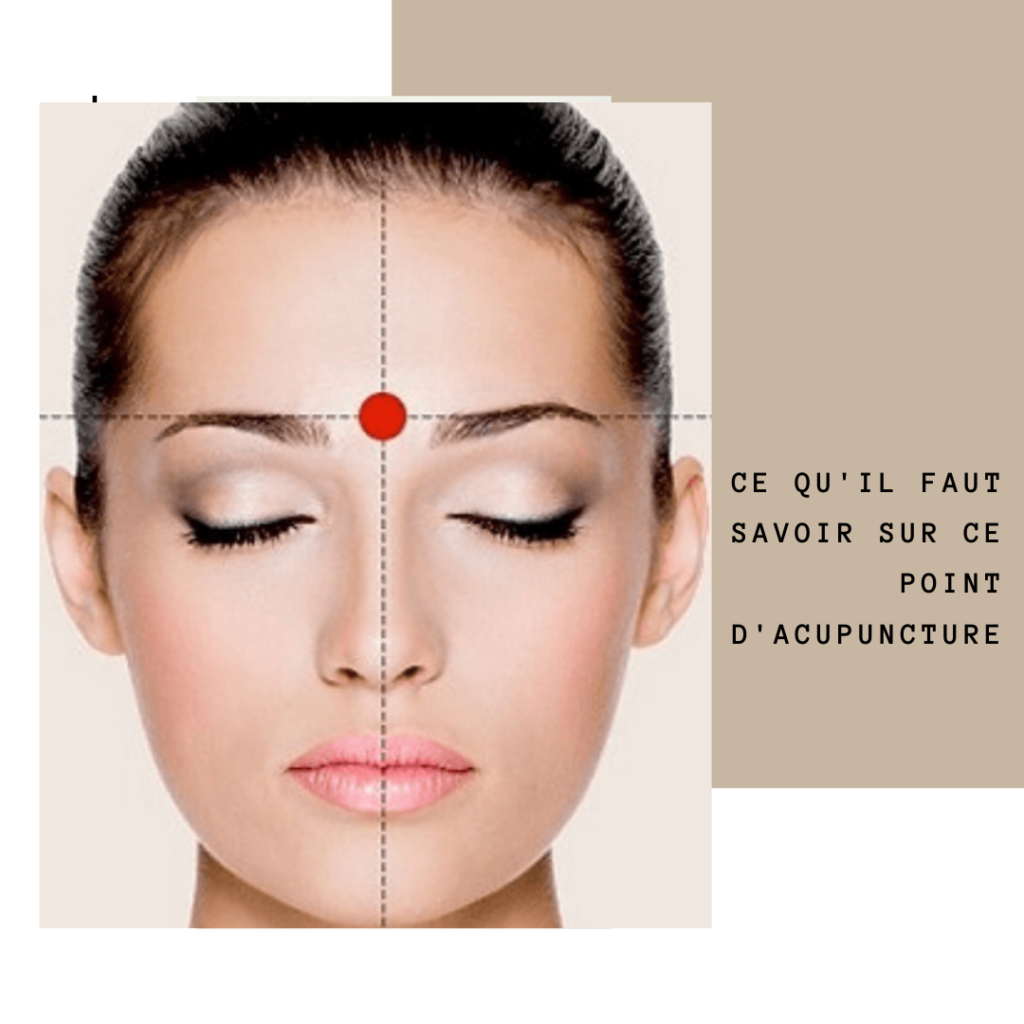
Acupuncture can help with psychological and emotional disorders (stress and anxiety). Widely used in treatments, Yintang is located in the space between the eyebrows.

Called the “palace of the mind”, it is a so-called “extraordinary” point. It is also known as the point of feelings and emotions. It has an effect on the intellect, the emotions and consciousness. It corresponds to the upper Dantian.

It corresponds to the “3rd eye” or sixth chakra: Ajna. This chakra symbolises intuition, clarity, meditation and confidence. “I see”

YinTang may help to calm the mind, improve concentration, release emotions, promote sleep, relieve migraines and support states of depression in liaison with the doctor.

Linked to the Heart meridian, local redness or warmth indicates states of heat or excess yang.

Its colour and texture help to diagnose the person’s state of health.

Indications

  • Anxiety, depression,
  • Insomnia,
  • Mental agitation,
  • Headaches, migraines,
  • Sinusitis, nasal congestion, rhinitis
  • Hangover,

This point is used for many reasons for consultation. It is often used in sessions such as weight loss or stopping smoking.