
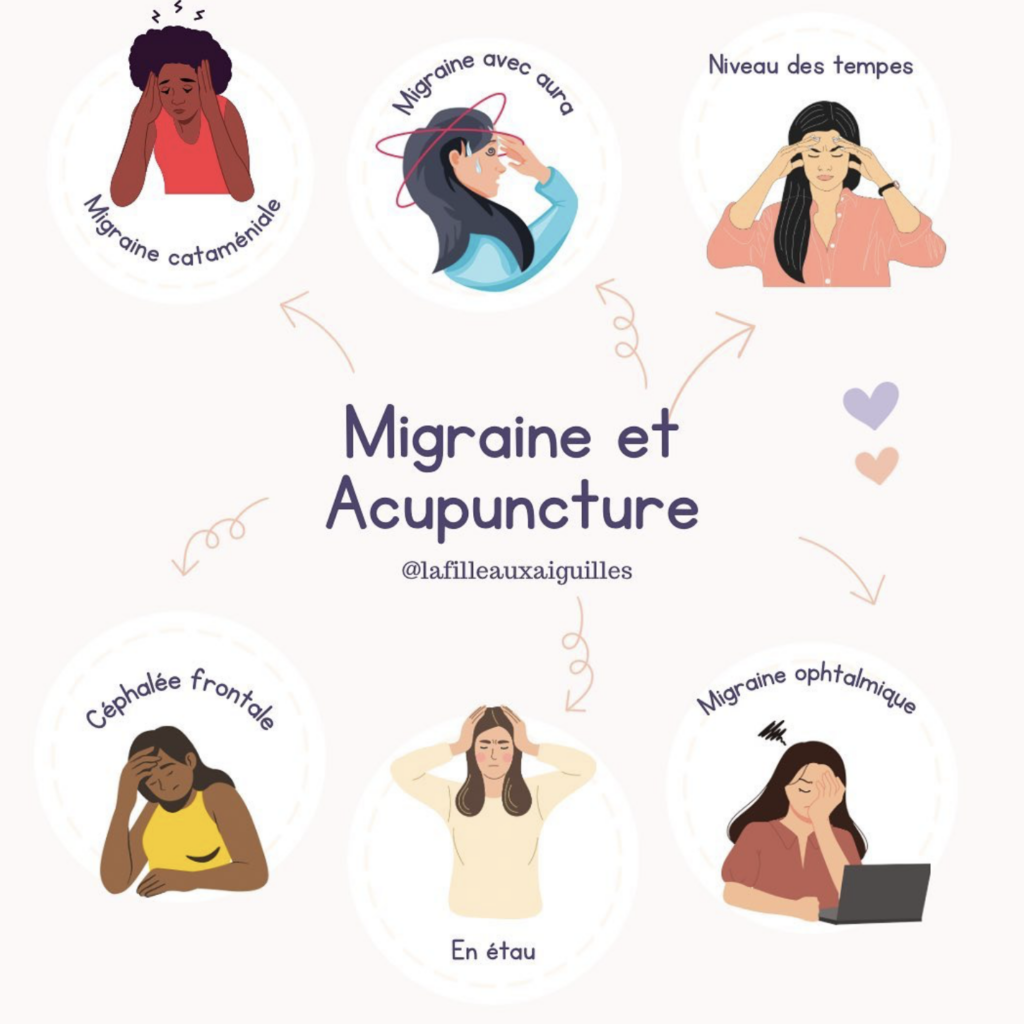
The effects of acupuncture on migraines: a natural, complementary approach
Migraines affect almost 15% of the world’s population, with intense pain often accompanied by nausea, vomiting and sensitivity to light or noise. While medication brings some relief, it does not work for everyone and can cause unwanted side effects. Acupuncture, an approach rooted in Traditional Chinese Medicine, is now the subject of a great deal of research on migraines. But how does it act on these headaches? What do scientific studies say? Let’s take a closer look.
How does acupuncture act on migraines?
Acupuncture is based on the idea that the human body is crossed by flows of energy, called “Qi” (pronounced “chee”), which circulate in specific channels called meridians. A disturbance or blockage in these flows can lead to various disorders, including migraines.
From a scientific point of view, here are the main mechanisms by which acupuncture may act on migraines:
- Stimulation of the nervous and hormonal systems:
By inserting needles at strategic points, acupuncture triggers the release of neurotransmitters such as endorphins and serotonin. These natural substances play a key role in managing pain and emotions, which may reduce sensitivity to migraines. - Reduced inflammation:
Acupuncture may reduce inflammatory markers in the body and help to lower the frequency and intensity of migraines. - Improved blood flow to the brain:
By promoting better blood supply to the tissues, it may help to relieve tension and limit the vascular spasms often associated with migraines. - Regulation of the autonomic nervous system:
This system controls involuntary functions such as blood pressure and heart rate. Acupuncture helps reduce stress and rebalance the body’s responses, two factors closely linked to migraines.
What studies say about acupuncture
A great deal of research has looked at acupuncture in the management of migraines, with encouraging but still limited results. Here are some recent studies:
- A study published in The BMJ (British Medical Journal) reportedly followed 500 patients with chronic migraines. Participants who received 12 acupuncture sessions over three months are said to have reported a 60% reduction in the frequency of their attacks, compared with 30% in the control group who received a placebo.
- A systematic review carried out by Cochrane in 2020 suggests that acupuncture may be more worthwhile than standard drug treatments for reducing migraine pain and improving patients’ quality of life.
- Some studies suggest an improvement in patients who followed a course of 8 to 10 sessions.
Testimonials and real results
Beyond the scientific data, patient testimonials bring a human and encouraging perspective. Claire, a patient who has had chronic migraines for 15 years, shares her experience:
“After my third session, I noticed a decrease in the intensity of my migraines. Within a few months, they went from once a week to once a month, and the pain is much less disabling.”
How many sessions are needed?
The number of acupuncture sessions depends on the severity of the migraines and the patient’s medical history. In general, an initial course of closely spaced sessions is recommended. Maintenance sessions may be needed to keep the benefits in the long term.
Why choose acupuncture?
Acupuncture has several advantages for people with migraines:
- Natural and non-invasive: No chemical substances or major procedures are involved.
- Compatible with other treatments: It can be used alongside medication or physical therapies.
- Uncommon and usually mild side effects: Unlike painkillers or preventive treatments, acupuncture performed by a trained practitioner does not usually cause fatigue, stomach problems or dependence.
Conclusion
Acupuncture offers a valuable complement to conventional migraine treatments. By acting on both the underlying causes and the symptoms, it may help to improve quality of life. Studied with encouraging but still limited results and backed by positive testimonials, this age-old method deserves consideration by anyone looking to take back control of their health.
Do not hesitate to consult a qualified acupuncturist to assess whether this approach may suit you. You may well find in these fine needles a key to finally relieving your migraines.