

As a former migraine sufferer, I managed to get rid of my migraines with natural care. I was on beta blockers and another neurological medication, but nothing worked.
Today I support patients suffering from migraines. Some patients had had migraines for more than 20 years.
For migraines or headaches, the first treatment offered is unfortunately still anti-migraine medication. However, some studies suggest that medications for migraines (paracetamol, Lamaline, beta blockers, ibuprofen) may be effective only for a short time. And they can have long-term side effects.
Often, for headaches or migraines, we ask patients to keep a diary or to change their lifestyle. Some therapies, such as relaxation and cognitive behavioural therapy, can improve them.

Taking coenzyme Q10 is reported to significantly reduce the frequency of migraines. Magnesium is reported to be effective in teenage girls who suffer from migraines during menstruation (catamenial migraines).
As for homeopathy, no reliable study shows whether or not it is effective on migraines, in the short or long term, for this chronic condition.
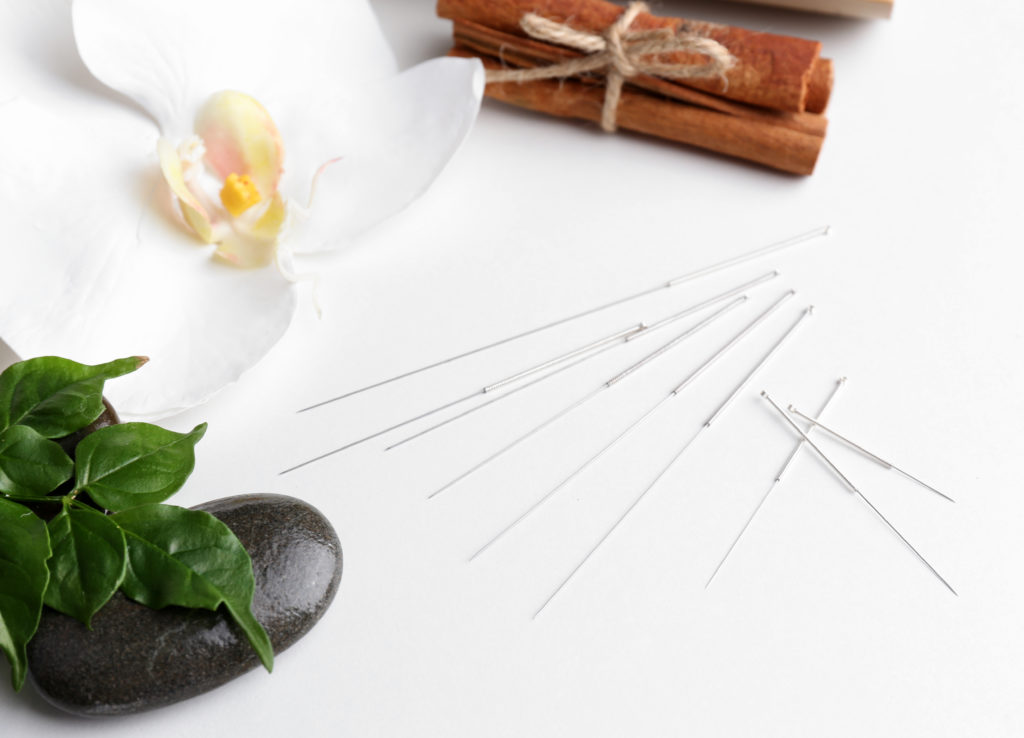
Acupuncture and the management of migraines
There are a great many studies on acupuncture and migraines. Some studies suggest that acupuncture may have an effect comparable to that of medication. Its side effects are uncommon and usually mild when performed by a trained practitioner. Other studies suggest that a course of acupuncture sessions may have an effect close to that of beta blockers. Of course, it is the patient’s choice to opt for such support, alongside medical care.
Acupuncture may help relieve and/or prevent migraines with or without aura, thanks to its pain-relieving effect. Some study data suggest a change in brain biochemistry linked to migraines after acupuncture treatment. It may contribute to a reduction in the frequency of attacks as well as a decrease in the intensity of pain.
During treatment, sterile single-use needles are inserted into acupuncture points along the meridians. The treatment is painless.
Acupuncture has also been the subject of studies with encouraging but still limited results for tension headaches, back pain (neck pain) and shoulder pain. Acupuncture may therefore be worthwhile alongside medical care.

Osteopathy: an appealing method for managing migraines
Osteopathy is also of interest for occipital (Arnold’s) neuralgia, tension headaches, ophthalmic migraines and migraines during menstruation. Other symptoms and clinical signs are explored, such as vomiting, nausea, abdominal pain (liver, spleen, stomach), high blood pressure, eyesight problems (unsuitable glasses), migraines that come on at night, on waking in the morning or in the evening, dizziness, allergy, diarrhoea, back pain, chronic illness, hormones, sinusitis, stress, and tension in the jaw. The causes are many. Osteopathy and/or acupuncture seek to identify the cause(s) in order to support patients with migraines, which are often disabling. Massage of the head, neck and shoulders may reduce tension headaches, for example. Indeed, there are different causes of migraines: eyesight problems, high blood pressure, digestive origin, cervical origin, heat, cold, fatigue.
At my practice I offer osteopathy or acupuncture, or I can combine both in the same session.