Acupuncture and psoriasis: a promising approach
Psoriasis is a chronic inflammatory skin disease, often associated with disabling symptoms such as erythematous plaques, scaling and itching. Although conventional treatments include topical creams, systemic medicines and phototherapy, some complementary approaches, such as acupuncture, are attracting growing interest for their potential to relieve symptoms while improving patients’ quality of life. This article explores the role of acupuncture in managing psoriasis, drawing on scientific data.
The scientific basis of acupuncture in the treatment of psoriasis
Several preliminary studies have assessed the effectiveness of acupuncture in inflammatory skin diseases, including psoriasis:
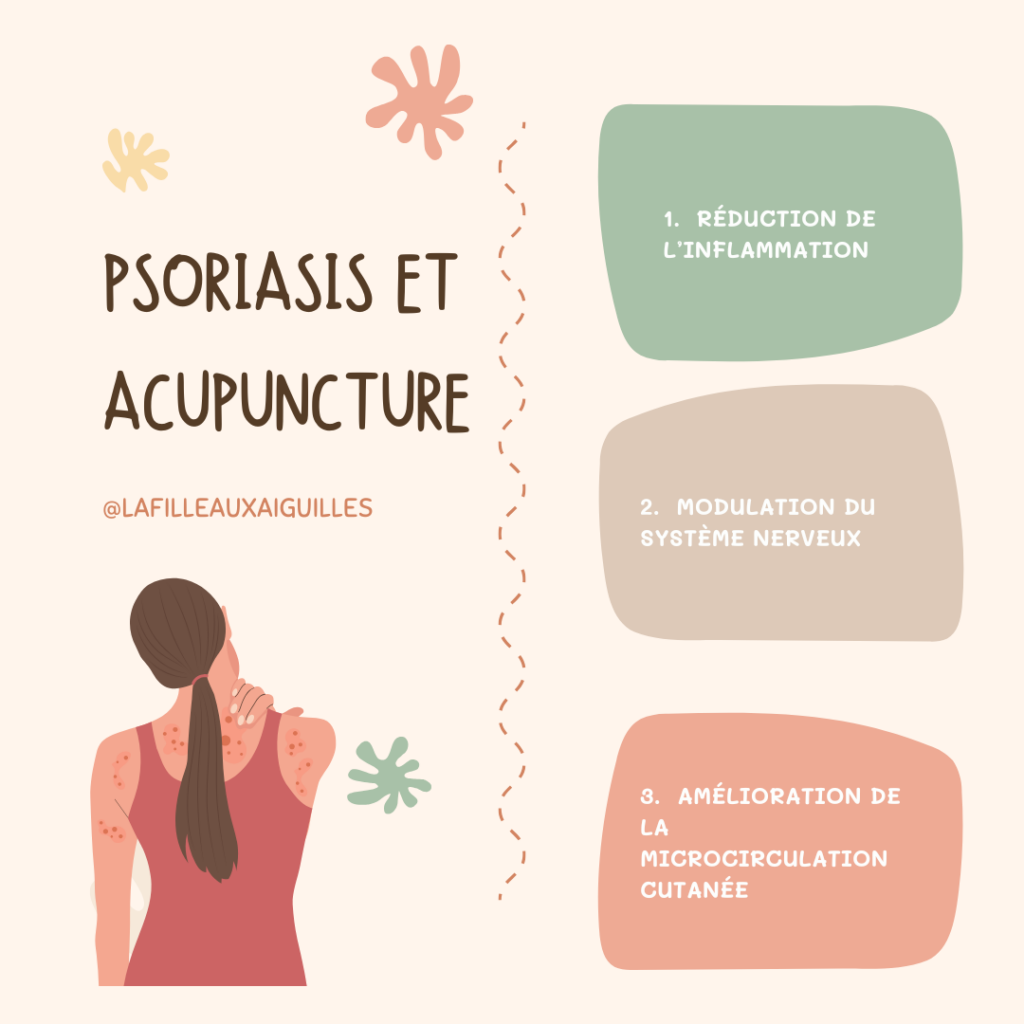
- Reduced inflammation: A study published in Evidence-Based Complementary and Alternative Medicine (2021) observed that acupuncture might lower levels of inflammatory cytokines, such as TNF-α and IL-17, which play a key role in the development of psoriasis.
- Modulation of the nervous system: According to a systematic review published in The Journal of Dermatological Treatment (2019), acupuncture may help to reduce stress and anxiety, factors often associated with psoriasis flare-ups.
- Improved skin microcirculation: A Chinese study (2020) reported that acupuncture might improve blood circulation in inflamed areas, which could help to reduce psoriatic plaques.
- Reduced symptoms: Research published in 2022 in Complementary Therapies in Medicine observed that 78% of patients treated with acupuncture reportedly noticed an improvement in their symptoms, including less itching and erythema.
- Improved general well-being: Some studies suggest an improvement in quality of life with acupuncture, based on the DLQI (Dermatology Life Quality Index).
Examples of clinical studies
- Randomised clinical trial (2021): A trial reportedly compared patients receiving acupuncture sessions with a control group treated only with topical creams, with a greater improvement in the extent of plaques in the acupuncture group. These results still need to be confirmed.
- Meta-analysis (2020): Analyses pooling several studies suggest that acupuncture, combined with the treatments prescribed by the dermatologist, may help to reduce skin symptoms and improve psychological well-being.
Case study: acupuncture in action
A 40-year-old man who had suffered from psoriasis for 10 years came for a consultation for extensive erythematous plaques on his elbows and knees. The main symptoms were intense itching and excessive scaling.
- Results after 6 weeks:
- Reduced itching.
- Visible reduction of the plaques.
- Improved quality of life.
Conclusion
Acupuncture is a promising complementary approach for patients with psoriasis, alongside their medical follow-up. Although large-scale studies are still needed, preliminary data and clinical cases suggest a noticeable improvement in symptoms and quality of life. For optimal results, an accurate diagnosis and treatment adapted to individual needs are essential.