acupuncture and winter

❄️ Traditional Chinese Medicine Tips for Living Well Through Winter

(Current season edition: Winter)

In Traditional Chinese Medicine (TCM), winter is the season of Withdrawal, Rest and Regeneration. Associated with the Water element, it has a particular influence on the Kidneys and vital energy (Jing). It is an ideal time to strengthen your deep energy, support your immunity and prepare the body for spring.

Here are the best TCM tips for getting through winter in good shape.

🌙 1. Slow down and respect the rhythm of the season

According to TCM, winter invites rest.
➡️ Go to bed earlier, avoid energy-draining activities, cut back on overly intense training.
➡️ Favour:

  • stretching
  • breathing
  • gentle walking
  • gentle yoga
  • qi gong

💡 TCM idea: listening to your body helps to preserve Yin, the foundation of Kidney energy.

🧣 2. Protect the Kidney area and the “cold wind”

Cold is the number one enemy of the Kidneys.
➡️ Keep the lower back nice and warm (lumbar wrap, hot water bottle, blankets).
➡️ Avoid sitting on cold surfaces.

💡 In TCM, cold blocks Qi and can weaken immunity or cause fatigue, lower back pain, sensitivity to cold and stagnation.

🍲 3. Eat warm, cooked and nourishing food

Winter is the season of comforting meals.
Prioritise:

✔️ Foods that tonify the Kidneys

  • Black beans
  • Black sesame
  • Walnuts
  • Miso
  • Seaweed
  • Mushrooms
  • Leeks
  • Broths

✔️ Long, warm cooking

  • stews
  • soups
  • pot-au-feu
  • congee

✔️ Mild spices (in moderation)

  • ginger
  • cinnamon
  • fennel
  • cardamom

Avoid:
❌ raw vegetables
❌ cold foods
❌ too much sugar
❌ iced drinks

💡 The digestive system (Spleen/Stomach) works better when it is kept warm.

💧 4. Hydrate… but warm

In winter, you can be thirsty without realising it.
Favour:

  • hot herbal teas
  • hot water with lemon in the morning
  • ginger or cinnamon infusions

💡 Hydrate without cooling: a key TCM principle in winter.

🛀 5. Support Kidney energy (Yin & Yang)

A few worthwhile rituals:

✔️ A hot foot bath in the evening

  • Epsom salts
  • fresh ginger (optional)

✔️ Self-massage of the lower back

Warm the Ming Men area (between the kidneys).

✔️ Deep breathing

Helps to calm the mind and tonify energy.

🧘 6. Emotions: cultivate calm

In TCM, winter is linked to fear and to stress at a deep level.
Tips:

  • meditation
  • writing
  • mindful breathing
  • limiting external demands

💡 A calm mind nourishes Yin and restores vital energy.

🌿 7. Useful herbs in winter (according to TCM)

🎋 Ginger – warms and aids digestion
🎋 Cinnamon (rou gui) – tonifies yang
🎋 Liquorice – harmonises Qi
🎋 Fenugreek or fennel – warms and soothes internal cold

(Always adapt to your condition, and avoid without advice in the case of pregnancy, medical conditions or treatments.)

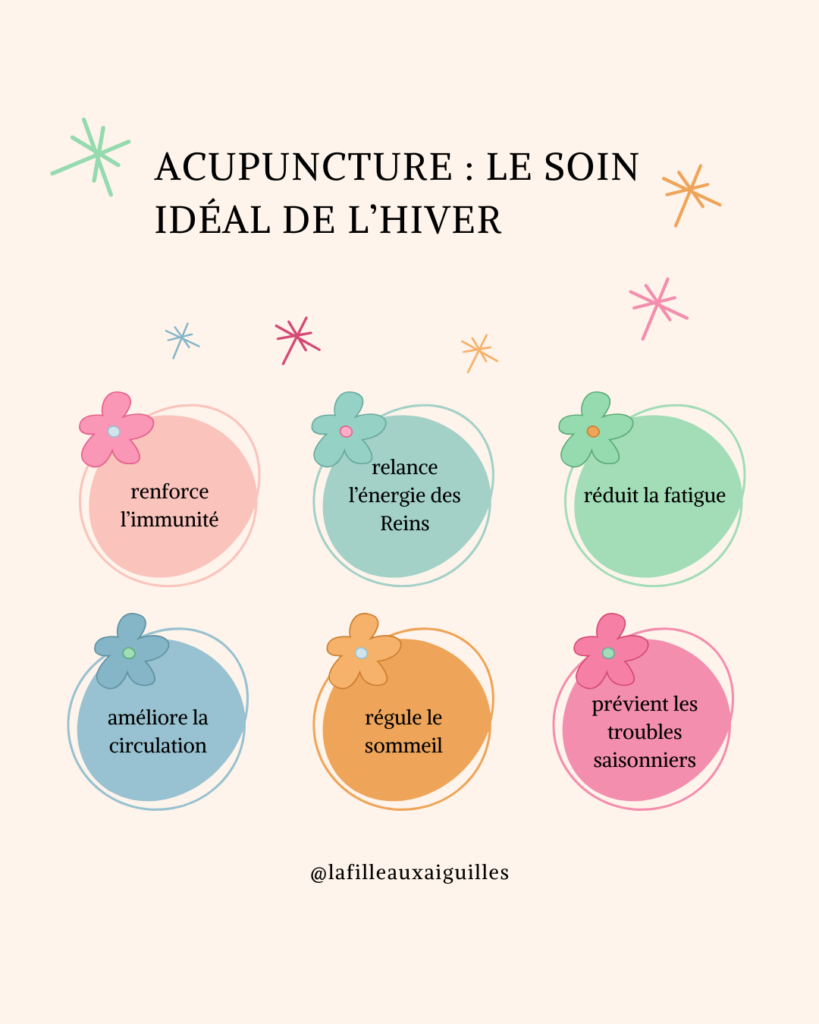
🧡 8. Acupuncture: the ideal winter treatment

Acupuncture may help to:

  • strengthen immunity
  • revive Kidney energy
  • reduce fatigue
  • improve circulation
  • regulate sleep
  • prevent seasonal complaints (colds, aches, low energy)

💡 Winter sessions prepare the energetic ground for spring.

❄️ Conclusion

Winter is a precious season in TCM: it is the perfect time to recharge, restore and protect your vital energy. The more you respect this introspective rhythm, the more you will arrive in spring in good shape, feeling light and full of energy.


Acupuncture and sinusitis: a natural approach

Introduction

Sinusitis is an inflammation of the sinuses, often linked to an infection, an allergy or a chronic problem. It causes troublesome symptoms: blocked nose, facial pain, headaches, fatigue. While conventional treatments (medicines, nasal rinses) can bring relief, more and more patients are looking for natural and complementary options.
Acupuncture, which comes from Traditional Chinese Medicine, offers an approach that may help reduce inflammation and improve breathing.

What is sinusitis?

Sinusitis can be:

  • Acute: often after a cold or a viral infection.
  • Chronic: when symptoms last more than 12 weeks.

The most common signs are: blocked nose, runny nose, pressure in the cheeks and forehead, fatigue, loss of smell.


Acupuncture: a natural approach to sinusitis

In Chinese medicine, sinusitis is often linked to stagnation of energy (Qi) and to a build-up of damp and heat in the respiratory tract.
The acupuncturist stimulates precise points on the face, the nose and the body to:

  • Clear the sinuses and improve breathing.
  • Reduce inflammation and pain.
  • Strengthen the immune system to limit recurrences.
  • Improve the circulation of energy and blood in the ENT area.

What scientific studies say

  • A systematic review (2018, Complementary Therapies in Medicine) observed that acupuncture combined with conventional treatments may significantly improve the symptoms of chronic sinusitis compared with medicines alone.
  • Some studies suggest that patients treated with acupuncture for chronic sinusitis reported an improvement in breathing and a reduction in pain.
  • Some patients report a feeling of release in the nose and forehead after the session.

Benefits of acupuncture for sinusitis

✔️ A natural approach, whose side effects are uncommon and usually mild when performed by a trained practitioner.
✔️ Some people notice an improvement in breathing and facial pain from the first sessions.
✔️ May help limit relapses.
✔️ Complementary to conventional medical treatments.


Conclusion

Acupuncture is a natural approach that may help relieve sinusitis, whether acute or chronic. By working on both the symptoms and the underlying constitution (immunity, circulation of energy), it offers a valuable complement to traditional treatments.
If you suffer from chronic or recurrent sinusitis, acupuncture can be a gentle and worthwhile option to improve your breathing comfort.

Why have acupuncture in autumn? 🍂

Acupuncture and autumn: a season of transition

Autumn is a turning point in the year. The days get shorter, temperatures drop, and our body has to adapt to these changes. According to Traditional Chinese Medicine (TCM), each season corresponds to an organ and an energy.
👉 Autumn is associated with the Lung and the Large Intestine, symbols of breathing, immunity and “letting go”.

Acupuncture is therefore particularly suitable at this time of year to strengthen vital energy and prepare the body for winter.


The benefits of acupuncture in autumn

1. Strengthening immunity

In autumn, the first colds, bronchitis and seasonal viruses appear. Acupuncture:

  • stimulates the energy of the Lung, which plays a key role in immune defences;
  • may help reduce the frequency and intensity of respiratory infections;
  • prepares the body to face the winter.

2. Preventing seasonal fatigue

The change from bright summer to darker autumn can cause fatigue and a drop in energy.
Acupuncture may help to:

  • rebalance Qi (vital energy),
  • improve the quality of sleep,
  • prevent chronic fatigue.

3. Balancing emotions

In TCM, the Lung is linked to the emotion of sadness. In autumn, it is common to feel melancholy or low in mood.
Acupuncture acts as natural emotional support: it soothes, recentres and encourages clarity of mind.

4. Relieving respiratory and skin problems

Lung energy also influences the skin and breathing. Autumn is a season in which the following often appear:

  • dry skin, eczema, itching,
  • coughs, asthma or respiratory allergies.
    Using specific points, acupuncture may help rebalance these disorders and improve respiratory and skin comfort.

5. Encouraging “letting go”

The Large Intestine, the organ associated with autumn, is linked to elimination, both physical and emotional.
Acupuncture supports this process by helping to:

  • regulate bowel movements,
  • eliminate toxins,
  • release certain mental or emotional tensions.

When should you see an acupuncturist in autumn?

It is advisable to plan sessions:

  • as prevention, to strengthen immunity before winter;
  • as support, if you suffer from fatigue, repeated colds, respiratory or skin problems;
  • as emotional support, if you feel sadness, stress or seasonal anxiety.

Conclusion

Having acupuncture in autumn means preparing your body and mind for winter, strengthening your immune system and finding a better emotional balance.
It is an ideal season to take care of yourself, prevent imbalances and cultivate your vital energy. 🍁


FAQ: acupuncture and autumn

1. How many acupuncture sessions should I plan in autumn?
In general, 2 to 3 sessions are enough as prevention, but more regular follow-up may be advised depending on your needs.

2. Can acupuncture replace conventional medicine?
No. Acupuncture is a complementary approach that can prevent and relieve, but it does not replace conventional medical follow-up.

3. Does acupuncture in autumn also help with sleep?
Yes, it may encourage deeper, more restorative sleep, which is often disrupted during seasonal changes.

Conclusion

Having acupuncture in autumn means preparing your body and mind for winter, strengthening your immune system and regaining a better emotional balance. 🍁

If you would like to enjoy the benefits of acupuncture in autumn, I welcome you at my practices:

👉 Book an appointment now for a personalised session and strengthen your natural defences before winter.

Shingles and acupuncture: a natural approach to relieving pain

Introduction

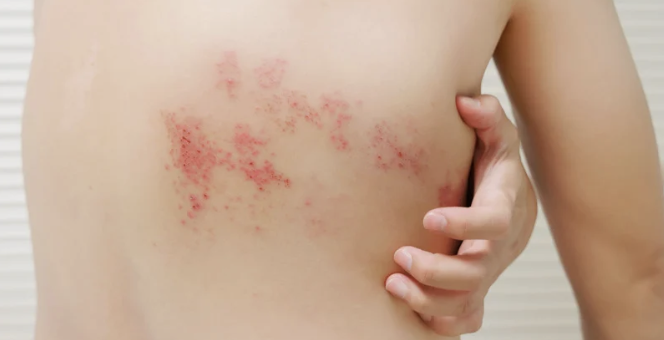
Shingles is a painful viral disease caused by the reactivation of the varicella-zoster virus (VZV). It mainly affects adults and people in poor health. Symptoms include skin rashes, intense burning and sometimes persistent pain known as post-herpetic neuralgia.
More and more patients are turning to acupuncture, a form of Traditional Chinese Medicine, alongside medical treatment, to reduce pain, speed up healing and limit complications.

In this article, find out how acupuncture can help with shingles, backed by scientific data.


What is shingles?

  • An infection caused by the varicella-zoster virus, which lies dormant in the nerve ganglia.
  • Reactivation is encouraged by: lowered immunity, stress, fatigue, age.
  • Symptoms:
    • Tingling, burning or pain before the rash appears.
    • Clusters of blisters on a specific area of the body.
    • Nerve pain that sometimes persists (post-herpetic neuralgia).

Acupuncture and shingles: how does it work?

Acupuncture may act on several mechanisms:

  • Pain relief: release of endorphins and modulation of the central nervous system.
  • Reduced inflammation: improved local circulation and stimulation of the immune defences.
  • Nerve recovery: prevention or reduction of chronic neuralgia.

👉 Acupuncture is the subject of extensive research for the relief of neuropathic pain.


Scientific studies on acupuncture and shingles

  • A literature review published in 2019 observed that acupuncture, combined with conventional care, might reduce the pain and duration of symptoms of shingles.
  • A clinical study (Li et al., 2018) observed that patients treated with acupuncture had less post-herpetic neuralgia than those who received medication alone.

Benefits of acupuncture for shingles

✔️ May help to reduce pain.
✔️ Can support skin healing.
✔️ May help to limit lasting nerve damage.
✔️ A natural approach; side effects are uncommon and usually mild when performed by a trained practitioner.
✔️ A complement to conventional medical treatments.


Conclusion

Shingles can be a very painful and disabling disease. Acupuncture can be a natural and complementary approach to help relieve pain, support healing and limit complications.
If you have shingles, consulting a qualified therapist may help you improve your comfort and quality of life.

Acupuncture and gastritis: a natural way to soothe the stomach

What is gastritis?

Gastritis is an inflammation of the stomach lining. It can be acute (sudden onset after an overly large meal, alcohol, stress…) or chronic (linked to an infection with Helicobacter pylori, to certain medicines, or to a digestive imbalance).

Common symptoms:

  • Stomach pain or burning
  • Nausea, bloating
  • Loss of appetite
  • Slow digestion and discomfort

These symptoms can greatly affect quality of life.

How does acupuncture act on gastritis?

According to Traditional Chinese Medicine (TCM), gastritis is often linked to an imbalance of the Stomach and the Spleen, sometimes with stagnation of the Liver. Acupuncture may act on several levels:

  • Digestive regulation: stimulates gastric motility and promotes better digestion.
  • Reduced inflammation: improves the circulation of energy and blood, soothing the stomach lining.
  • Pain relief: relieves burning and the feeling of heaviness.
  • Anti-stress effect: reduces the part played by stress and anxiety in making gastritis worse.

What scientific studies say

  • A meta-analysis published in 2020 in Evidence-Based Complementary and Alternative Medicine observed that acupuncture, combined with standard medical treatment, may significantly improve the symptoms of chronic gastritis.
  • Other studies suggest a role in reducing pain, nausea and gastric inflammation.

Acupuncture and gastritis: a personalised treatment

Every patient is unique: acupuncture takes into account the underlying causes (stress, diet, energy imbalance). After a full assessment, a personalised protocol is put in place, often with 1 session a week to begin with.


Conclusion

Gastritis can be very troublesome in daily life. Acupuncture offers a natural solution, alongside medical follow-up. It may help to reduce pain, improve digestion and prevent relapses.

Acupuncture and autumn: strengthening the Lung and Large Intestine to stay well

Acupuncture and autumn: the season of the Lung and Large Intestine

In Traditional Chinese Medicine (TCM), autumn begins… in August! This is not a mistake: each energy season begins before the official change on the calendar. Autumn corresponds to the Metal element and is associated with the Lung and Large Intestine meridians, which play an essential role in our energy and our immune defences.

Why does autumn weaken the Lung and Large Intestine?

At this time of year, the body prepares to face the cooler weather and the fall in daylight. According to TCM, the Lung controls breathing, the spreading of energy (Qi) and immunity. The Large Intestine, for its part, supports the elimination of waste and helps to maintain a healthy terrain.

An imbalance in these meridians can show up as:

Acupuncture as prevention in autumn

Acupuncture stimulates specific points that may help to:

  • Strengthen immunity  and protect against respiratory infections
  • Improve breathing  and lung capacity
  • Regulate bowel movements
  • Prepare the mind  for the cold season, by easing sadness or anxiety

Seasonal advice in TCM

Alongside acupuncture, here are a few habits to adopt:

  • Breathe deeply  every morning to nourish the Lung
  • Eat warm, cooked food  (avoid too much raw food)
  • Favour white, seasonal foods: pears, turnips, radishes, mushrooms
  • Avoid getting too cold, especially on the neck and back
  • Go to bed a little earlier to support your vital energy

💡 Conclusion: by starting your acupuncture sessions in August, you help your body prepare for autumn, by supporting your defences and your mood.

To book an appointment, go directly to doctolib

Constipation and acupuncture: a natural solution in Cadenet and Aix-en-Provence

Constipation is a common digestive disorder that can have a strong impact on quality of life: bloating, abdominal discomfort, a feeling of heaviness or fatigue. If you are looking for a natural solution, acupuncture may help you restore more regular bowel movements by acting deeply on your digestive system.

🌿 Acupuncture, a holistic approach to constipation

Acupuncture may help to:

  • Stimulate intestinal peristalsis (the contractions that move stools along)
  • Reduce stress, often a factor in digestive disorders
  • Rehydrate the intestines by encouraging the circulation of fluids
  • Regulate the energy of the digestive organs and clear blockages

Each treatment is personalised according to your constitution, your symptoms and your medical history.

🔬 What studies suggest

Some studies suggest that acupuncture may improve stool frequency and consistency, and reduce abdominal pain, in people suffering from chronic functional constipation.
A systematic review published in the “World Journal of Gastroenterology” even suggested that acupuncture may be more worthwhile than certain drug treatments, with fewer side effects.

👥 Who is acupuncture suitable for? Acupuncture can support different forms of constipation:

  • Constipation linked to stress or anxiety

  • Constipation in pregnant women (with gentle techniques, in liaison with your midwife or doctor)

  • Constipation after antibiotics or after surgery

  • Constipation linked to a sedentary lifestyle or to diet

  • Chronic functional constipation

  • 📍 Two practices to support you. I see patients at two practices for personalised sessions

    :➡️ Acupuncture practice in Cadenet📍 Centre de soins naturels – 15 route de Pertuis🗓 By appointment, Monday to Saturday

    ➡️ Acupuncture practice in Aix-en-Provence📍 75 Avenue Marcelin Berthelot (Les Milles business park)🗓 Consultations also by appointment

    Each session lasts about 45 minutes to 1 hour and begins with a full energy assessment.


    ⚠️ Important: see a doctor if constipation persistsAcupuncture is a complementary approach. In the event of persistent constipation, severe abdominal pain, blood in the stools or any other unusual sign, it is essential to see a doctor to rule out any organic cause or underlying condition.


    📞 Book an appointment. Do you suffer from constipation and would like to try acupuncture? Contact me for tailored support:

     Book an appointment on Doctolib


    💬 Google review

    “Since my acupuncture sessions, my bowel movements have become regular naturally, without medication. I recommend it!”⭐⭐⭐⭐⭐ – Marie, Aix-en-Provence

    Hot flushes: what does Traditional Chinese Medicine say?

    Do you suffer from hot flushes, especially at night or during hormonal changes? These sudden sensations of heat, often accompanied by sweating, redness and irritability, are common, particularly at menopause. In Traditional Chinese Medicine (TCM), hot flushes are not seen as a simple symptom, but as an energy imbalance that can be supported naturally, in particular with acupuncture.

    🔥 What is a hot flush according to TCM?

    In TCM, hot flushes are generally linked to Yin Deficiency, in particular Kidney Yin, which can no longer temper the Yang. This creates a rise of internal heat, responsible for episodes of sudden heat, sweating and redness, sometimes accompanied by palpitations, sleep problems or dryness.

    Sometimes there is also Liver Fire or Blood Deficiency, depending on the person’s history, emotional state and age.


    ⚖️ Common causes according to TCM:

    • Menopause (Kidney Yin Deficiency)
    • Physical or mental overwork
    • Unexpressed grief or anger (Liver heat)
    • Chronic insomnia
    • Irregular menstrual cycles
    • Postpartum or prolonged breastfeeding

    🪡 What can acupuncture do for hot flushes?

    Acupuncture seeks to rebalance Yin and Yang, calm the rising heat and support the Kidneys. It may act on the nervous and hormonal systems, encouraging a natural regulation of the body’s functions.

    The possible benefits of acupuncture:

    • Reduced frequency and intensity of flushes
    • Improved sleep
    • Less irritability and anxiety
    • Hormonal regulation
    • General sense of calm

    🧪 A clinical study published in 2016 observed that acupuncture may reduce the frequency of hot flushes by more than 50% after a few weeks of treatment (source: Menopause. 2016;23(6):602-610).

    🌿 Alongside treatment: herbal medicine and lifestyle

    Depending on your energy assessment, plants such as chasteberry or maca may be recommended to nourish the Yin or harmonise the Liver.

    You can also be given personalised advice on:

    📍 Where to book a session

    You can receive personalised support in Chinese medicine at my two practices:

    ➡️ Acupuncture practice in Cadenet
    📍 In the heart of the Luberon, between Pertuis and Lourmarin.
    🌿 Consultations by appointment in a calm and welcoming setting.

    ➡️ Acupuncture practice in Aix-en-Provence
    📍 A few minutes from the town centre, easy to reach.
    🌿 Gentle, natural care, specialising in hormonal problems and menopause support.


    🤲 A natural, whole-person treatment

    Hot flushes are not inevitable. In Chinese medicine, each person is unique: this is why a full energy assessment is carried out at the first session in order to adapt the treatment to your needs.

    Acupuncture and stopping smoking: natural and personalised support

    Would you like to stop smoking, but are you worried about cravings or relapses?

    Stopping smoking is a real challenge, both physically and psychologically. If you are looking for a natural method without nicotine replacement, acupuncture can be valuable support in this process. Please note, however: it is not a miracle solution, but personalised support that respects your pace and your needs.

    🎯 How does acupuncture help you stop smoking?

    Acupuncture may act on several levels:

    • Reduction of withdrawal symptoms (irritability, nervousness, sleep problems, food cravings)
    • Less desire to smoke
    • Emotional stabilisation: better management of stress, emotions and anxiety
    • Overall energy balancing to support the body as it detoxifies

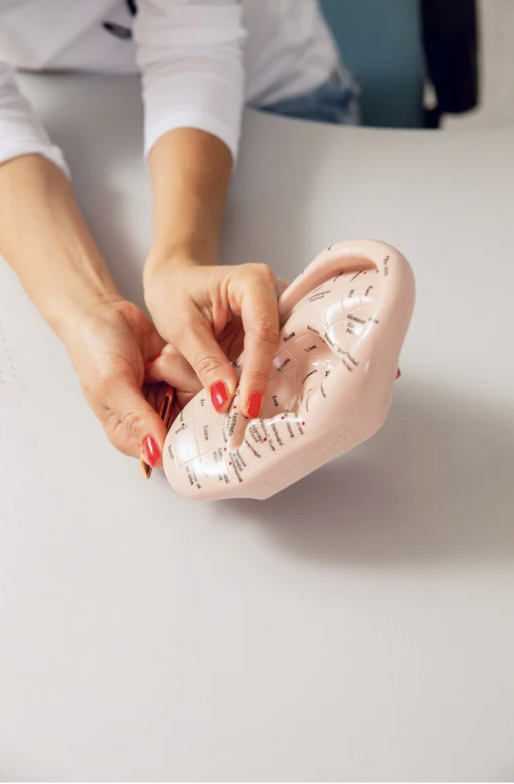
    It is based on stimulating precise points, in particular on the ears and the body, which regulate the nervous, digestive and hormonal systems.

    ⏳ Gradual support, adapted to your profile

    Each person is unique: some feel relief from the first session, others need longer follow-up.

    💡 Sessions are held every 15 days, then spaced out as you progress.

    👉 The aim is to support you step by step, with kindness, by strengthening your motivation and reducing your dependence.

    🙏 No miracle solution, but real natural help

    Let’s be clear: acupuncture does not “make you stop” overnight. It may help you cope better with withdrawal, to manage cravings, and above all to reconnect with your deep wish to stop.

    It is a therapeutic partnership, in which you play an active part in your own process.

    📍 Where can you see me?

    I welcome you at my acupuncture practices:

    • In Aix-en-Provence (town centre, easily accessible)
    • In Cadenet, in the heart of the Luberon

    Each session begins with a conversation to adapt the treatment to your progress.

    🎧 Acupuncture and tinnitus: a natural approach that may help to relieve ringing in the ears

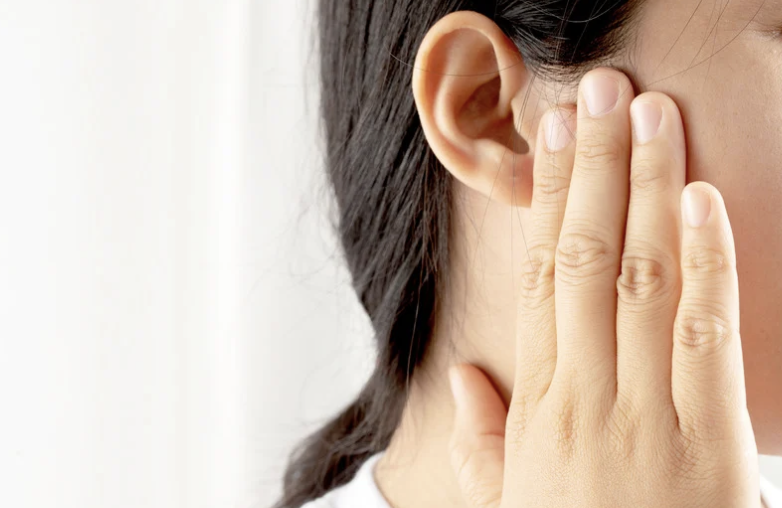
    Tinnitus, those unwanted noises (whistling, buzzing, clicking…) heard without any external sound source, affects nearly 15% of the population. It can be temporary or chronic, and can greatly affect quality of life: sleep problems, anxiety, difficulty concentrating, irritability…

    But did you know that acupuncture may help ease these symptoms naturally, with side effects that are uncommon and usually mild when performed by a trained practitioner?

    🎯 What is tinnitus?

    Tinnitus is an abnormal perception of sound that can affect one or both ears, continuously or intermittently. It is often linked to:

    Conventional medical treatment is often limited and does not offer a definitive solution. This is where acupuncture, which comes from Traditional Chinese Medicine, can come in alongside medical care.


    🌿 How does acupuncture act on tinnitus?

    Acupuncture aims to restore the flow of energy (Qi) and to correct imbalances between the organs according to Chinese medicine.

    For tinnitus, sessions can have several aims:

    • Relaxing the nervous system, which is often under chronic tension
    • Improving blood circulation in the head and ears
    • Rebalancing the organs involved in hearing (Kidney, Liver, Spleen)
    • Reducing stress and auditory hypervigilance

    The acupuncture points selected vary according to the patient’s profile: how long the symptoms have been present, their intensity, triggering factors, emotional background…


    📊 What do scientific studies say?

    Several studies have looked at acupuncture for hearing problems, with encouraging but still limited results:

    • A 2020 systematic review (Journal of Acupuncture and Meridian Studies) observed a reduction in tinnitus intensity in patients treated with acupuncture.
    • A Chinese study (Zhao et al., 2015) observed a significant improvement in quality of life in patients with chronic tinnitus after 6 acupuncture sessions.

    The holistic approach of acupuncture therefore aims to support both the symptom (the noise) and the underlying constitution (stress, tension, circulation…).


    🧘‍♀️ Why choose acupuncture for your tinnitus?

    ✅ Natural, non-invasive method
    ✅ Personalised treatment
    ✅ Overall support (sleep, stress, fatigue)
    ✅ A complementary approach to ENT care


    📍 Where can you get support?

    We offer acupuncture sessions specialising in support for tinnitus at our two practices:

    ➡️ Aix-en-Provence
    ➡️ Cadenet (Vaucluse)

    Each course of treatment begins with a full assessment in order to adapt the protocol to your situation. Support may also include lifestyle or herbal medicine advice if necessary.


    📅 Book an appointment

    Don’t let tinnitus dominate your daily life. Acupuncture may help to relieve your symptoms, naturally.

    📞 Contact us today for a session in Aix-en-Provence or Cadenet.