When should you have acupuncture to get pregnant?

fertility acupuncture Aix-en-Provence, trying for a baby, conception, assisted reproduction, IVF
acupuncture to get pregnant

More and more women are taking an interest in acupuncture when planning a pregnancy. Whether conception is natural or assisted reproduction (ART) is being considered, acupuncture is often used as a complementary approach to support patients.

But when should sessions begin? How long before a pregnancy? How often should you come? Here is what you need to know.

Why see an acupuncturist when trying for a baby?

According to the principles of Traditional Chinese Medicine, acupuncture aims to promote the overall balance of the body.

When planning a pregnancy, patients frequently come in order to:

  • Support the wish to become pregnant
  • Encourage a more regular menstrual cycle
  • Support women with PCOS
  • Reduce the stress of trying to conceive
  • Support an assisted reproduction journey
  • Support general well-being before a pregnancy

Acupuncture does not replace gynaecological or medical care and forms part of an overall approach to care.

When should you start acupuncture to encourage a pregnancy?

Ideally, it is often best to begin several months before trying to conceive.

In Chinese medicine, it is generally recommended to prepare the body over several menstrual cycles in order to support the various mechanisms involved in female fertility.

Many practitioners recommend support over a period of 3 to 6 months where possible.

This length of time makes it possible to follow several cycles and to adapt the sessions according to how they change.

Should you have an acupuncture session at the time of ovulation?

No. Contrary to a common belief, there is no need to come exactly at the time of ovulation in order to work on this phase of the cycle.

In Traditional Chinese Medicine, treatment is not limited to the phase of the cycle the patient is in on the day of the consultation. During the assessment, the practitioner analyses the whole menstrual cycle in order to identify any imbalances: quality of periods, follicular phase, ovulation, luteal phase or premenstrual syndrome.

A patient can therefore come during her luteal phase and receive treatment aimed at supporting ovulation in the following cycle. In the same way, a consultation during a period can make it possible to work on imbalances observed after ovulation or in the second half of the cycle.

Acupuncture looks at how the menstrual cycle works as a whole. Treatment is therefore adapted to the patient’s needs and not only to the phase of the cycle at the time of the session.

This approach offers a great deal of flexibility: support can begin at any point in the cycle, without waiting for a particular time.

Acupuncture and assisted reproduction

Acupuncture is frequently used alongside assisted reproduction (ART).

Some patients come:

  • Before ovarian stimulation
  • During IVF
  • During intrauterine insemination (IUI)
  • Before and after an embryo transfer

The aim is to support physical and emotional well-being throughout this often demanding journey.

How many sessions are needed?

The number of sessions varies according to:

  • The patient’s age
  • Her gynaecological history
  • How regular her cycles are
  • How long she has been trying to conceive
  • Whether PCOS or endometriosis is present
  • The assisted reproduction context

In general, regular follow-up over several cycles is often offered.

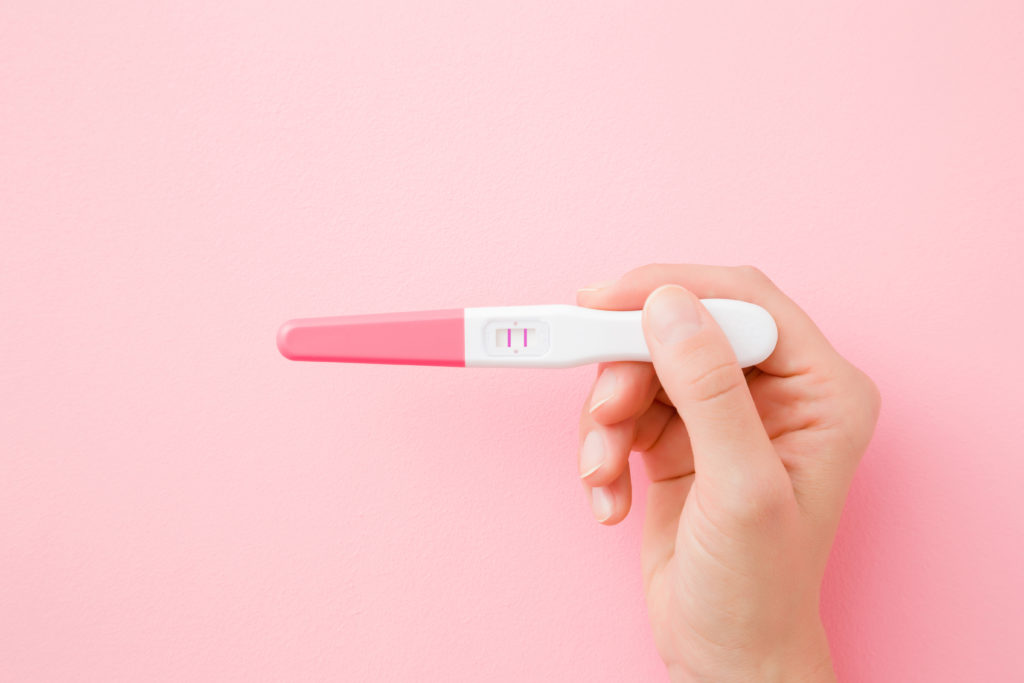
Can you continue acupuncture after a positive test?

Yes. Some women continue their sessions in early pregnancy.

Acupuncture is then adapted to this new period in order to support the physiological changes of pregnancy.

The importance of a holistic approach

Fertility depends on many factors.

Acupuncture ideally fits into a holistic approach that includes:

  • Appropriate medical follow-up
  • A balanced diet
  • Regular physical activity
  • Good stress management
  • Good-quality sleep

As every situation is unique, personalised support makes it possible to adapt the sessions to each patient’s needs.

Conclusion

If you would like to get pregnant, it is generally advisable to start acupuncture several months before conception in order to support the menstrual cycle and prepare the body. Whether for natural conception or an assisted reproduction journey, acupuncture can form part of an overall, personalised approach to care.

FAQ: Acupuncture and fertility

When should you start acupuncture to get pregnant?

It is often recommended to begin sessions around 3 to 6 months before trying for a pregnancy in order to support several menstrual cycles.

How many acupuncture sessions does it take to get pregnant?

The number of sessions depends on each situation. Regular follow-up over several cycles is frequently offered.

Can acupuncture help with PCOS?

Some women with PCOS consult an acupuncturist as part of an overall approach to their fertility, alongside their medical follow-up.

Can you have acupuncture during IVF?

Yes, many patients choose to include acupuncture in their assisted reproduction journey, alongside the care provided by their medical team.

Does acupuncture increase the chances of pregnancy?

Results vary from patient to patient and from one situation to another. Acupuncture does not guarantee a pregnancy but can form part of an overall approach to trying to conceive.

Can you continue acupuncture after becoming pregnant?

Yes, sessions can be continued during pregnancy, with care adapted to this period.
Osteopathy or acupuncture: which therapy should you choose?

When you suffer from pain, stress or functional disorders, it is not always easy to know which practitioner to turn to. Osteopathy and acupuncture are two complementary approaches that aim to improve well-being and support the body in how it functions. But what are the differences between them? When should you see an osteopath or an acupuncturist?

What is osteopathy?

Osteopathy is a manual therapy based on a holistic approach to the body. The osteopath uses their hands to assess and treat mobility restrictions that may affect the joints, muscles, fascia or certain functions of the body.

The aim is to improve the mobility of the body’s structures and encourage better functional balance.

People often consult an osteopath for:

  • Back and neck pain
  • Muscle tension
  • Joint pain
  • Posture-related problems
  • Jaw pain
  • Discomfort linked to pregnancy
  • Some pain linked to sport

What is acupuncture?

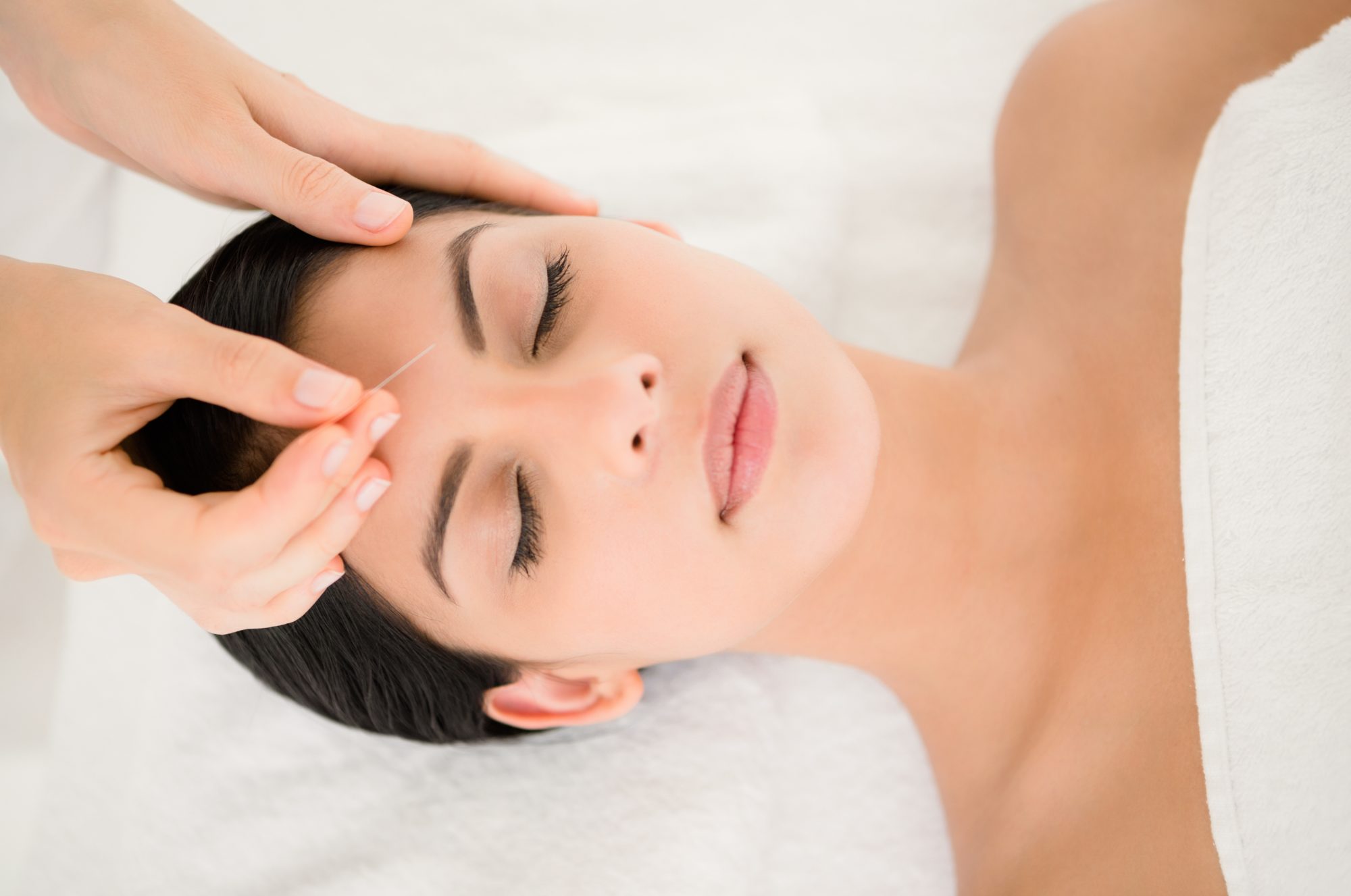
Acupuncture is a practice that comes from Traditional Chinese Medicine. It involves stimulating specific points on the body with fine needles.

According to Chinese medicine, this stimulation aims to restore a harmonious flow of energy in the body.

Today, acupuncture is often used as a complement to medical care to support various functional disorders.

The most common reasons for consultation are:

  • Stress and emotional difficulties
  • Sleep problems
  • Chronic pain
  • Migraines
  • Functional digestive disorders
  • Period pain
  • Fertility support
  • Symptoms of the menopause

Osteopathy or acupuncture: what are the differences?

The main difference lies in their approach.

Osteopathy works mainly through manual techniques that aim to restore the mobility of tissues and joints.

Acupuncture is based on stimulating specific points on the body with needles in order to encourage the overall balance of the body, according to the principles of Traditional Chinese Medicine.

These two approaches are not in opposition. They are often complementary.

When should you choose osteopathy?

Osteopathy is often preferred when the main complaint involves:

  • Mechanical pain
  • Restricted mobility
  • Joint discomfort
  • Muscle tension
  • A postural problem

For example: low back pain, neck pain, a locked joint, jaw pain or recovery after physical exertion.

When should you choose acupuncture?

Acupuncture is often chosen when the symptoms are part of a broader or functional picture:

  • Stress
  • Fatigue
  • Sleep problems
  • Premenstrual syndrome
  • Functional digestive disorders
  • Fertility support
  • Menopause-related symptoms

It can also be included in the management of some chronic pain.

Can osteopathy and acupuncture be combined?

Yes. Many patients benefit from a combined approach.

Osteopathy may help to improve mobility and reduce some mechanical strain, while acupuncture may support the functional balance of the body.

Depending on the reason for consultation, these two approaches can be offered as complements to each other.

How do you choose the most suitable therapy?

The choice depends above all on your reason for consultation, your expectations and your personal situation.

At a first consultation, the practitioner carries out an assessment to determine the most relevant approach, or to refer you to another health professional when necessary.

Conclusion

Osteopathy and acupuncture are two different but complementary approaches. Osteopathy focuses mainly on the mobility and mechanical strain of the body, while acupuncture aims to support the functional balance of the body according to the principles of Traditional Chinese Medicine.

The choice will depend on your problem, but in many cases these two disciplines can be combined for holistic care.

FAQ – Osteopathy or acupuncture

What is the difference between osteopathy and acupuncture?

Osteopathy uses manual techniques to improve the mobility of tissues and joints. Acupuncture involves stimulating specific points on the body with fine needles.

Is osteopathy more effective than acupuncture?

There is no universal answer. Effectiveness depends on the reason for consultation, the patient and the clinical context.

Can I have an osteopathy session and an acupuncture session on the same day?

In some cases this is possible. The practitioner will adapt the care to the patient’s needs.

Which should I choose for stress: osteopathy or acupuncture?

Acupuncture is often sought for stress-related problems. Osteopathy can also support some of the associated physical tension.

Which should I choose for back pain?

Osteopathy is often sought for mechanical back pain and mobility problems.

Which should I choose for sleep problems?

Acupuncture is regularly used to support sleep problems and stress.

Can osteopathy and acupuncture be combined?

Yes. These two approaches are often complementary and can be included in holistic care tailored to the patient.

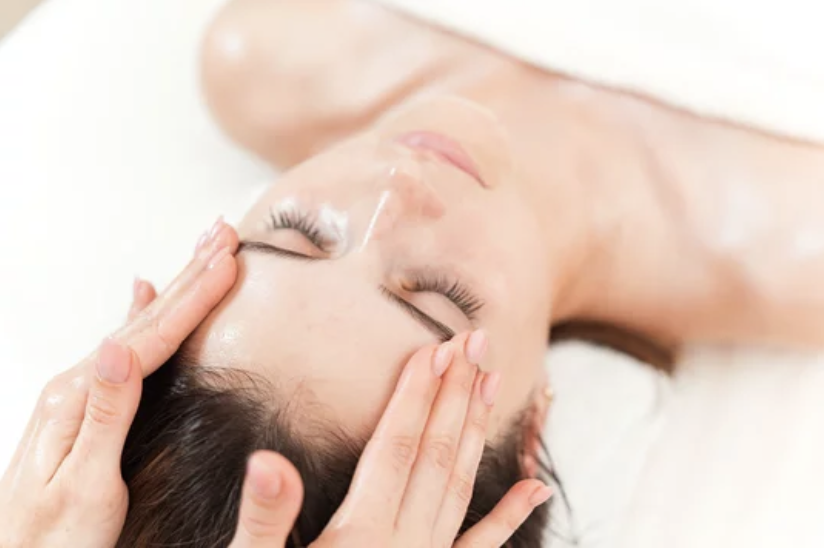
Facial lymphatic drainage: what are the benefits for puffiness and a tired-looking face?

The face can sometimes look puffy, tired or congested, particularly on waking, or after a period of stress, fatigue or water retention. Some people also feel tension in the face, the jaw or the sinuses.

Facial lymphatic drainage is attracting growing interest today as a way to support these feelings of congestion and encourage better circulation of fluids.


What is facial lymphatic drainage?

The lymphatic system is involved in the circulation of fluids and the elimination of waste in the body.

In the face, slowed circulation can contribute to:

  • puffiness;
  • bags under the eyes;
  • a feeling of heaviness;
  • a dull complexion;
  • a tired-looking face;
  • a feeling of congestion.

Facial lymphatic drainage brings together gentle manual techniques intended to stimulate this circulation.


Why can the face become puffy?

Several factors can contribute to facial congestion:

  • stress;
  • fatigue;
  • lack of sleep;
  • hormonal fluctuations;
  • water retention;
  • seasonal allergies;
  • neck tension;
  • functional circulatory disorders;
  • a diet high in salt;
  • lack of hydration.

Some people also notice a puffier face:

  • in the morning;
  • before their period;
  • during hot weather;
  • after a bad night;
  • during periods of intense fatigue.

The benefits sought from facial lymphatic drainage

Patients often consult to improve:

The feeling of puffiness

Particularly in:

  • the cheeks;
  • the eyelids;
  • the eye area;
  • the facial contour.

Bags under the eyes

Drainage may help to encourage better local circulation.

Facial tension

Some people have tension in:

  • the jaw;
  • the temples;
  • the sinuses;
  • the forehead.

Radiance of the complexion

Better circulation can contribute to skin that feels fresher and less congested.

Overall relaxation

The gentle techniques used often bring a deep feeling of relaxation.


Facial drainage and a holistic osteopathic approach

In osteopathy, the work is not limited to the face.

Depending on your needs, the session may also include:

  • the cervical spine;
  • the jaw (TMJ);
  • breathing;
  • the diaphragm;
  • muscle tension;
  • overall circulation.

The aim is to support the functional disorders that may contribute to tissue congestion.


Facial lymphatic drainage and hormonal water retention

Some women notice more facial puffiness:

  • before their period;
  • during the menopause;
  • during periods of hormonal fluctuation.

Lymphatic circulation can then be influenced by hormonal fluctuations and water retention.


Some tips to limit facial puffiness

Alongside the sessions:
✔️ stay well hydrated;
✔️ improve your sleep;
✔️ limit excess salt;
✔️ move regularly;
✔️ work on your breathing;
✔️ limit chronic stress.


FAQ – Facial lymphatic drainage

Does facial lymphatic drainage help with puffiness?

Yes, it is often sought out to support a puffy-feeling face, bags under the eyes or water retention.


Why is my face puffy in the morning?

Lack of sleep, water retention, stress, hormones or certain circulatory tensions can contribute to this feeling.


Is facial drainage painful?

No, the techniques are generally gentle and relaxing.


How many sessions are needed?

It depends on your needs and on how often the puffiness occurs. Some people consult occasionally, others more regularly.


Can facial drainage help with bags under the eyes?

Some people notice an improvement in the feeling of congestion and heaviness around the eyes.


Can you have facial drainage when you are stressed?

Yes, nervous tension and fatigue can influence circulation and congestion in the facial tissues.


Consultations in Aix-en-Provence and Cadenet

I offer a holistic, personalised approach to functional circulatory disorders, tension and water retention.

📍 Consultations in Aix-en-Provence and Cadenet.

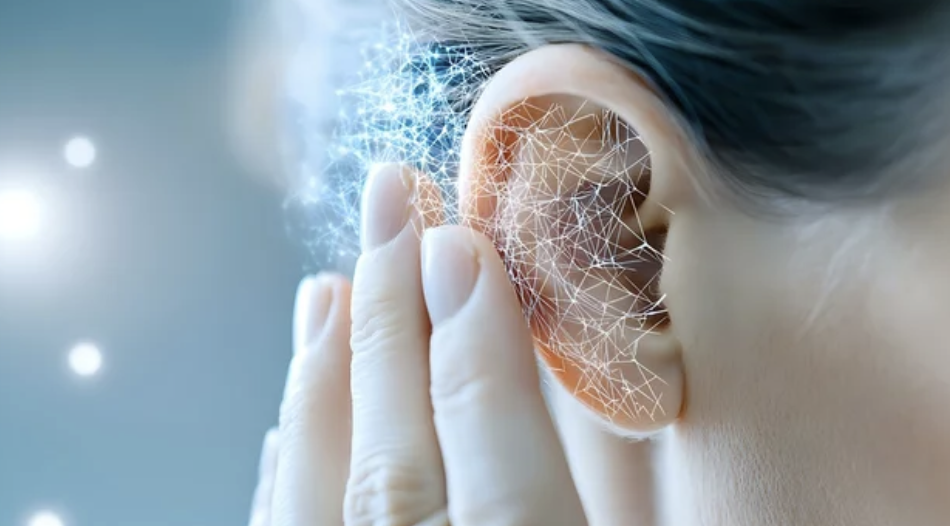
Acupuncture and tinnitus: a holistic approach to improve day-to-day comfort

Tinnitus affects many people and can become particularly hard to live with when it persists over time. Buzzing, whistling, permanent or intermittent sound sensations… these symptoms can have a significant impact on sleep, concentration, stress and quality of life.

Faced with these often complex disorders, some people turn to acupuncture as part of a complementary, holistic approach.


What is tinnitus?

Tinnitus is the perception of sound with no real external source.

People often describe:

  • whistling;
  • buzzing;
  • crackling;
  • pulsing;
  • a sensation of continuous or intermittent noise.

Tinnitus can affect one ear or both.


What can cause tinnitus?

Tinnitus has multiple origins, which are sometimes combined:

  • stress and nervous fatigue;
  • neck tension;
  • jaw disorders (TMJ);
  • exposure to noise;
  • auditory fatigue;
  • sleep disorders;
  • anxiety;
  • certain ear, nose and throat (ENT) conditions.

In some cases, no specific cause is found.


What role does acupuncture play in tinnitus?

In Traditional Chinese Medicine, tinnitus is often associated with energy imbalances involving in particular:

  • the nervous system;
  • circulation;
  • tension;
  • fatigue;
  • certain functional imbalances.

Acupuncture aims to support the body through a holistic approach by working on:

  • relaxation;
  • stress regulation;
  • muscle tension;
  • circulation;
  • the general balance of the body.

Tinnitus and stress: a frequent link

Many people notice their tinnitus increasing during:

  • periods of stress;
  • intense fatigue;
  • overwork;
  • anxiety;
  • lack of sleep.

The nervous system plays an important role in the perception and intensity of the symptoms.

Acupuncture is often sought out to encourage a state of deep relaxation and improve stress management.


Acupuncture and neck tension

Tension in:

  • the neck;
  • the trapezius muscles;
  • the jaw;
  • the temporomandibular joint

can sometimes be associated with certain types of tinnitus.

The holistic approach of acupuncture may then be worthwhile to support these functional tensions.


What does research say about acupuncture and tinnitus?

Several studies have looked at the use of acupuncture in the management of tinnitus. Some suggest a possible improvement in comfort and quality of life for some patients.

However, results remain variable depending on:

  • how long the symptoms have been present;
  • their origin;
  • the person’s constitution;
  • the associated level of stress.

Acupuncture does not replace a medical ENT assessment, particularly in the case of:

  • sudden onset;
  • hearing loss;
  • dizziness;
  • pulsatile tinnitus;
  • unusual symptoms.

How many sessions are needed?

The number of sessions depends on each person.

Recent tinnitus can sometimes respond more quickly than disorders that have been present for several years.

Regular sessions are often suggested at the start in order to assess how the symptoms evolve.


Some additional advice

Alongside the sessions, some habits may help:

  • improving sleep;
  • limiting chronic stress;
  • reducing exposure to noise;
  • working on neck tension;
  • practising breathing or relaxation;
  • maintaining a healthy lifestyle.

FAQ – Acupuncture and tinnitus

Can acupuncture help tinnitus?

Some people consult for support with their tinnitus, particularly when it is associated with stress, fatigue or neck tension.


Can acupuncture make tinnitus go away?

Results vary from person to person and depending on the origin of the symptoms. The aim is often to improve comfort and quality of life.


How long does it take to feel the effects?

Some people feel an improvement quickly, while others need several sessions.


Is acupuncture effective for stress-related tinnitus?

As stress is frequently associated with the intensity of tinnitus, some people consult to work on relaxation and the regulation of the nervous system.


Which acupuncture points are used for tinnitus?

The choice of points depends on each person’s energy assessment and symptoms.


Is acupuncture painful?

The needles are very fine and the sensations are generally mild.


Can acupuncture be combined with ENT follow-up?

Yes, acupuncture is part of a complementary approach and does not replace medical follow-up when this is necessary.


Acupuncture consultations in Aix-en-Provence and Cadenet

I offer a holistic, personalised approach to functional disorders, stress, tension and the discomfort associated with tinnitus.

📍 Consultations in Aix-en-Provence and Cadenet.

Acupuncture and sinusitis: a natural approach to relieving ENT discomfort

Sinusitis can quickly become very uncomfortable in daily life. A feeling of pressure in the face, a blocked nose, headaches, fatigue, congestion… these symptoms can affect sleep, breathing and quality of life.

More and more people are turning to acupuncture to support ENT (ear, nose and throat) problems and improve their breathing comfort naturally.


What is sinusitis?

Sinusitis is an inflammation of the sinuses, the cavities around the nose and eyes.

It can be:

  • acute;
  • chronic;
  • linked to a viral or bacterial infection;
  • encouraged by allergies;
  • made worse by persistent inflammation or poor ventilation of the sinuses.

Common symptoms are:

  • blocked nose;
  • a feeling of pressure in the face;
  • pain in the forehead or cheekbones;
  • nasal discharge;
  • fatigue;
  • headaches;
  • a feeling of congestion.

What role does acupuncture play in ENT problems?

In Traditional Chinese Medicine, ENT problems are often associated with imbalances linked to the flow of energy, dampness, heat or the body’s defences.

Acupuncture aims to restore a better overall balance using fine needles placed on specific points of the body.

For sinusitis and ENT congestion, acupuncture can be used to support:

  • the feeling of a blocked nose;
  • facial tension;
  • congestion;
  • associated headaches;
  • recurring chronic problems;
  • sinusitis linked to seasonal allergies.

Acupuncture and chronic sinusitis

Some people suffer from almost constant congestion or repeated sinusitis throughout the year.

Stress, fatigue, allergies or chronic inflammation can keep these problems going.

Acupuncture then offers a more holistic approach aimed at:

  • improving circulation;
  • supporting the body’s ability to adapt;
  • encouraging drainage;
  • reducing tension;
  • supporting an inflammatory tendency.

What benefits are sought?

Patients often come to try to improve:

Nasal breathing

A better feeling of air passing through and less congestion.

Facial pain and pressure

In particular in the forehead, sinuses and cheekbones.

Associated headaches

ENT tension can sometimes encourage headaches or a “heavy” head.

Overall comfort

Sleep, fatigue and the feeling of well-being can also be affected when breathing is disrupted.


What does research say about acupuncture and sinusitis?

Several studies have looked at the use of acupuncture for ENT problems and chronic sinusitis. Some suggest a potential benefit for quality of life, nasal congestion and patient comfort.

Results vary depending on the person and the origin of the symptoms.

Acupuncture does not replace medical follow-up, in particular in cases of:

  • high fever;
  • severe pain;
  • serious infection;
  • bacterial sinusitis requiring specific treatment.

How many sessions are needed?

The number of sessions depends on:

  • how long the symptoms have been present;
  • the person’s constitution;
  • how often sinusitis occurs;
  • the person’s general health.

Recent problems sometimes respond more quickly than chronic congestion that has been present for several years.


A few additional tips

Alongside sessions, some habits can help:

  • nasal rinsing with saline solution;
  • good hydration;
  • limiting irritants;
  • managing stress;
  • getting enough sleep;
  • regular physical activity.

FAQ: acupuncture and sinusitis

Can acupuncture help with sinusitis?

Acupuncture can be used to support some of the discomforts linked to sinusitis and ENT congestion, in particular the feeling of a blocked nose, facial tension or associated headaches.


Is acupuncture effective for chronic sinusitis?

Some people with chronic or recurring sinusitis come to improve their breathing comfort and reduce episodes of congestion.


How many sessions are needed for sinusitis?

It depends on how long the symptoms have been present and on the person’s constitution. Acute and recent problems can sometimes improve more quickly than chronic congestion.


Which acupuncture points are used for sinusitis?

The choice of points depends on each person and on the assessment carried out during the session. In Traditional Chinese Medicine, points are adapted according to the symptoms and the person’s constitution.


Can you have acupuncture for seasonal allergies?

Yes, some people come during the pollen season or for allergic rhinitis to support ENT symptoms and congestion.


Is acupuncture painful?

The needles used are very fine and the sensations are generally mild.


Acupuncture consultations in Aix-en-Provence and Cadenet

I support you with a holistic and personalised approach to functional ENT problems, congestion and the tension that goes with them.

📍 Consultations in Aix-en-Provence and Cadenet.

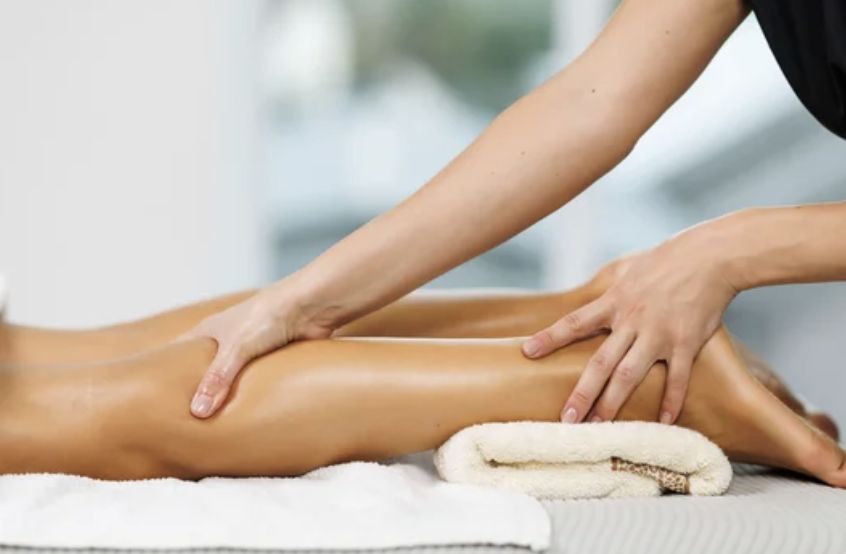
Heavy legs and oedema: what can you do to improve circulation?

The feeling of heavy legs affects many people, especially at the end of the day. It is often accompanied by swelling, known as oedema, linked to a build-up of fluid in the tissues.

This phenomenon is generally a sign of slower venous and lymphatic circulation.

👉 Fortunately, there are solutions to improve the situation.


💡 Why do we get heavy legs?

Heavy legs appear when blood and lymph circulate less efficiently. Several factors can be at the root of this:

  • Prolonged standing or sitting
  • Heat (summer, heating)
  • Venous return problems
  • Hormonal changes (menstrual cycle, PMS)
  • Intense physical activity
  • Lack of movement

👉 Result: fluids stagnate in the lower limbs, causing swelling and discomfort.


⚠️ When should you be concerned?

In some cases, medical advice is essential, particularly if you have:

  • Sudden, painful swelling
  • Suspected phlebitis
  • Significant, persistent oedema
  • A history of heart or kidney problems

👉 These situations require a medical assessment before any treatment.


👐 How can osteopathy help?

Osteopathy offers a holistic approach to improve the circulation of fluids in the body.

Treatment is not limited to the legs. It aims to act on the key structures of venous and lymphatic return:

  • The pelvis, an essential passageway
  • The diaphragm, which acts as a circulatory pump
  • The abdomen, involved in deep lymphatic drainage
  • The lower limbs

👉 The aim is to restart circulatory exchanges and to limit the stagnation of fluids.


🌿 What results can you expect?

After appropriate treatment, some people notice:

  • Less swelling
  • A feeling of lighter legs
  • Improved comfort at the end of the day
  • Better recovery after sport

🧠 A holistic approach

To optimise the effects of treatment, it is often recommended to act on several levers:

  • Moving regularly (walking, mobility)
  • Adapting your physical activity
  • Working on your breathing (diaphragm)
  • Adapting your lifestyle

👉 The aim is to support both the symptoms and their causes.


📍 When should you see an osteopath?

You can come if:

  • Your legs regularly feel heavy
  • You have swelling at the end of the day
  • You feel you recover poorly after sport
  • You are prone to water retention

📍 Osteopathy consultations in Aix-en-Provence and Cadenet

I see patients for personalised care of heavy legs and oedema, taking into account your lifestyle, your physical activity and your hormonal context.


🚀 Book an appointment

Early treatment may help to limit circulation problems becoming established.

👉 Book now for a personalised assessment
👉 Take care of your circulation and the feeling of heavy legs


Chalazion: natural support with acupuncture and osteopathy in Aix-en-Provence and Cadenet

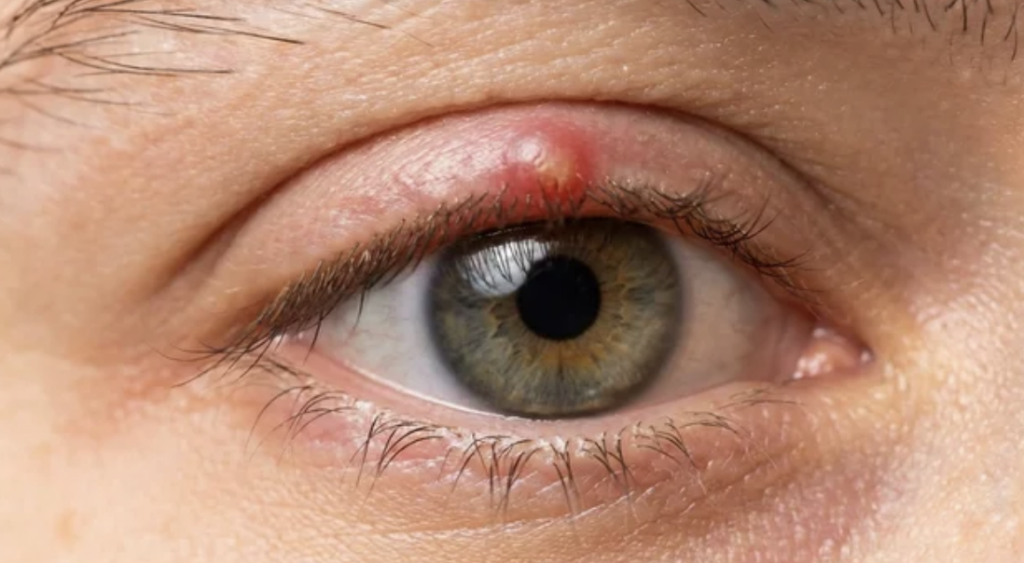
A chalazion is a common inflammation of the eyelid, often benign but sometimes slow to go away.
Although it can be treated medically, some complementary approaches such as acupuncture and osteopathy may help to act in depth, in particular when it recurs.

👉 Find out how a holistic approach may help reduce inflammation and limit relapses.


🔎 What is a chalazion?

A chalazion is an inflammation of a gland in the eyelid (Meibomian gland), linked to its blockage.

Common symptoms:

  • Small lump on the eyelid
  • Localised swelling
  • Feeling of discomfort
  • Sometimes associated redness

👉 Unlike a stye, it is generally not infectious and not very painful.

⚠️ Medical advice: an essential step

Before any treatment, it is important to consult a health professional (doctor or ophthalmologist) in order to:

  • confirm the diagnosis
  • rule out another condition
  • adapt the treatment if necessary

👉 Acupuncture and osteopathy are used as a complement, and not as a replacement for medical follow-up.


🌿 Why does a chalazion appear?

🔬 The Western view

  • Blocked sebaceous glands
  • Local inflammation
  • Predisposing factors (oily skin, dry eyes…)

🌱 The Traditional Chinese Medicine view

In Traditional Chinese Medicine, a chalazion is often linked to:

  • 🔥 accumulation of Heat (Liver / Stomach)
  • 🧠 stress → stagnation of energy (Qi)
  • 🍔 a rich diet (fat, sugar, dairy products)
  • 💧 poor circulation of fluids

👉 We do not treat only the eyelid, but the whole constitution.

🪡 Acupuncture for chalazion

Acupuncture aims to rebalance the body and reduce inflammation.

Aims:

  • reduce inflammation
  • encourage drainage
  • improve local circulation
  • act on internal causes (stress, digestion)

👉 Particularly useful in cases of:

  • persistent chalazion
  • frequent recurrences
  • an inflammatory tendency

👐 Osteopathy: restoring circulation

Osteopathy complements acupuncture well by acting on the mechanics of the body.

Work carried out:

  • release of cranial tension
  • improvement of microcirculation in the face
  • drainage of the ENT area (sinuses, eye area)

👉 Aim: to encourage the chalazion to resolve naturally

🔄 Why combine acupuncture and osteopathy?

Combining the two approaches allows holistic care:

  • ✔️ internal action (acupuncture)
  • ✔️ mechanical and circulatory action (osteopathy)
  • ✔️ work on the causes and not only the symptoms

🎯 Aim: a complete approach to:

  • speed up recovery
  • improve comfort
  • limit recurrences

🥗 Tips to prevent chalazia

✔️ Diet

  • limit sugar and dairy products
  • avoid too much fat
  • favour an anti-inflammatory diet

✔️ Lifestyle

  • sleep well
  • manage stress
  • avoid touching or rubbing your eyes

✔️ Local care

  • warm compresses
  • eyelid hygiene
  • gentle massage (if recommended)

📍 Consultations in Aix-en-Provence and Cadenet

I offer personalised support with acupuncture and osteopathy, adapted to your constitution and your particular problem.

👉 Each treatment is holistic, with particular attention paid to:

  • your general health
  • your diet
  • your stress levels

🎯 In summary

A chalazion is a common condition that can become chronic.
A combined acupuncture + osteopathy approach, alongside medical follow-up, may help to act on:

  • inflammation
  • circulation
  • the underlying causes

👉 For lasting, holistic care.

Stress and the menstrual cycle: understanding the link and restoring balance naturally

Stress is now part of everyday life… but its impact goes well beyond fatigue or mental load. It directly influences your hormonal balance and can disrupt your menstrual cycle.

Irregular cycles, no ovulation, more intense premenstrual syndrome… If this applies to you, stress may well be one of the main causes.

In this article, find out about the link between stress and the menstrual cycle, as well as natural solutions for restoring lasting balance.


The role of cortisol in your menstrual cycle

Cortisol is the main stress hormone. When it is released occasionally, it is useful. But when it becomes chronic, it deeply disrupts the hormonal system.

The body works to a simple priority: survival before reproduction.

👉 In a stressful situation, your body puts certain functions on hold, including ovulation.

The result:

  • A disrupted cycle
  • Delayed or absent ovulation
  • Oestrogen / progesterone imbalance

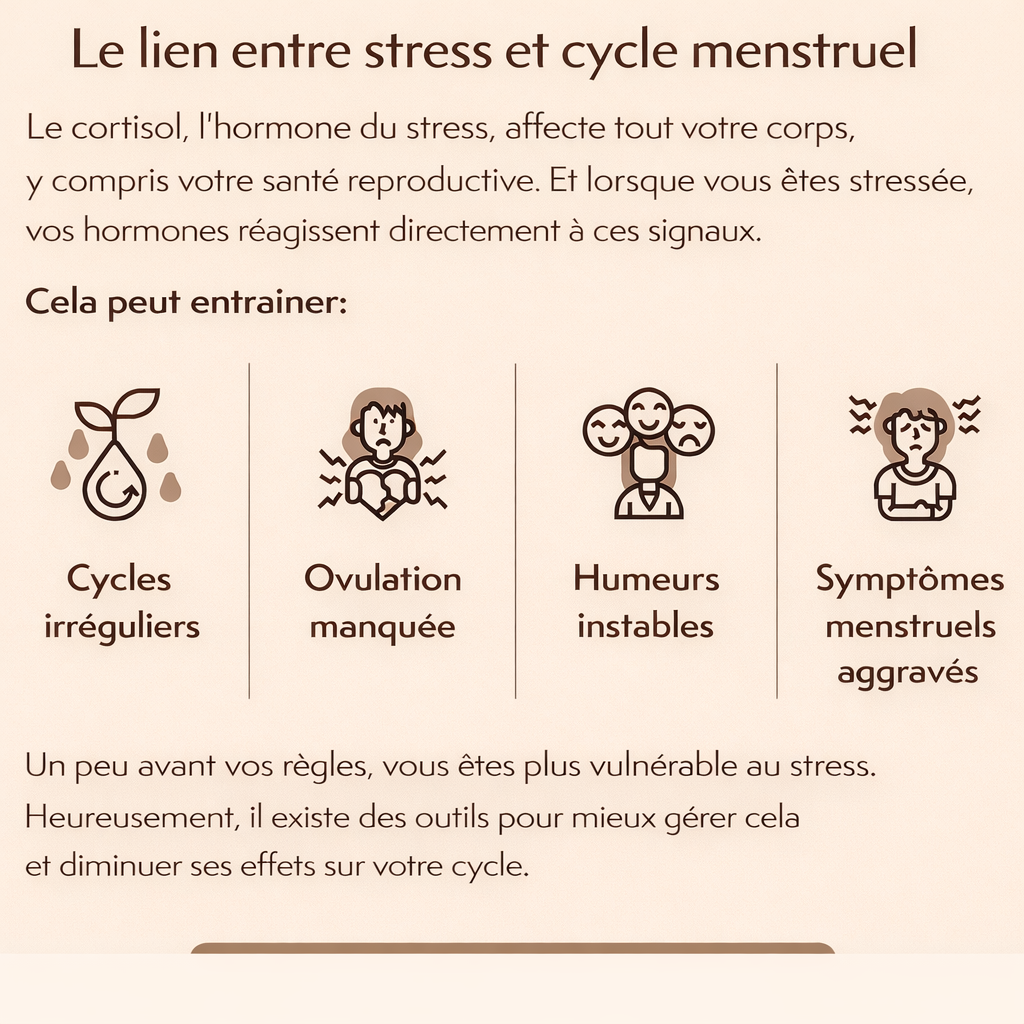
Stress and the menstrual cycle: what are the concrete effects?

Chronic stress can lead to several visible disruptions:

🔸 Irregular cycles

Longer, shorter or unpredictable cycles.

🔸 Disrupted or absent ovulation

Stress can block the hormonal signal needed for ovulation.

🔸 Worse premenstrual syndrome (PMS)

Irritability, anxiety, fatigue, more intense pain.

🔸 Unstable moods

Cortisol acts directly on the nervous and emotional system.


Why are you more sensitive to stress before your period?

The premenstrual phase (luteal phase) is a time of hormonal vulnerability.

👉 Progesterone gradually falls
👉 The nervous system becomes more reactive
👉 Stress tolerance decreases

This is why you may feel:

  • More irritable
  • More tired
  • More emotionally sensitive

How can you regulate your cycle naturally despite stress?

Good news: it is possible to act on your hormonal balance by reducing the impact of stress.

🌿 Acupuncture: a useful lever

Acupuncture may help to:

  • Regulate the nervous system
  • Lower cortisol
  • Support ovulation
  • Relieve PMS

Some studies suggest that it may improve cycle regularity and reduce menstrual symptoms.


🌿 Breathing and stress management

Simple techniques such as cardiac coherence breathing help to regulate the nervous system quickly.


🌿 A suitable diet

Favour:

  • Foods rich in magnesium
  • Omega-3s
  • An anti-inflammatory diet

🌿 Rest and recovery

Lack of sleep increases cortisol and disrupts hormones even further.


When should you seek help?

If you notice:

  • Persistently irregular cycles
  • No ovulation
  • Intense PMS
  • Chronic fatigue

Personalised support can help you to restore balance.


Acupuncture support in Aix-en-Provence and Cadenet

I support you in consultation to:
✔️ Rebalance your menstrual cycle
✔️ Reduce the impact of stress
✔️ Improve your hormonal comfort

📍 Practices in Aix-en-Provence and Cadenet
📅 Online appointment booking


Conclusion

Stress is a key factor in menstrual cycle disorders that is often underestimated. By understanding its impact and putting suitable solutions in place, it is possible to restore lasting hormonal balance.


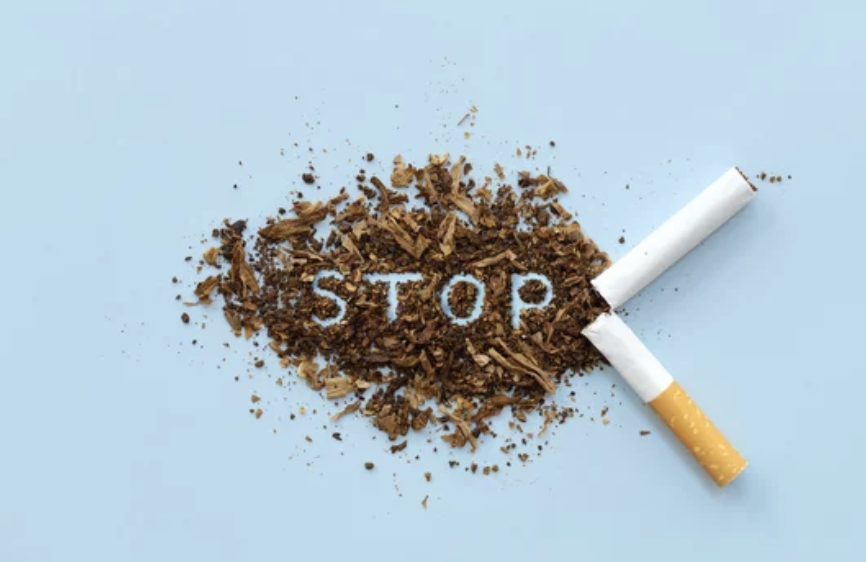
Acupuncture and stopping smoking: what can you really expect?

Stopping smoking is a difficult process, often marked by withdrawal symptoms, stress and relapses. More and more patients are turning to acupuncture as a natural option to support them.

But does it really work? And above all, what can you realistically expect from it?

This article gives you a clear, honest and realistic picture.


🔎 Can acupuncture help you stop smoking?

Yes, acupuncture can be a valuable aid when giving up smoking.
It acts mainly on the nervous and emotional system, which makes stopping easier to live with.

However, it is important to understand that it does not replace personal motivation.

👉 Acupuncture is a support tool, not a miracle cure.


✅ The real effects of acupuncture

1. Reduced withdrawal symptoms

When you stop smoking, the body reacts to the absence of nicotine. This can cause:

Acupuncture may help to ease these symptoms by regulating the nervous system.


2. Fewer cravings

Some patients experience:

  • a reduced urge to smoke
  • a feeling of “distance” from cigarettes
  • sometimes even a feeling of distaste

⚠️ This effect varies from person to person and depends heavily on motivation.


3. Managing stress and emotions

Stress is one of the main causes of relapse.

Acupuncture may help to:

  • reduce anxiety
  • improve relaxation
  • avoid compensating behaviours (snacking, nervousness)

4. Limiting weight gain

In some patients, it helps to:


❗ The limits you should know about (essential)

To avoid any disappointment, it is important to be transparent:

  • Acupuncture does not completely eliminate withdrawal
  • It does not make you “stop effortlessly”
  • It does not guarantee that you will stop for good

👉 The deciding factor remains: your decision to stop

A patient who is not ready will see few results, even with several sessions.


📊 What do the studies say?

Scientific studies show variable results:

  • improved comfort during withdrawal
  • interesting short-term results
  • but more worthwhile results when it is combined with other methods

👉 Conclusion:
Acupuncture is more worthwhile as a complement to overall support.


💡 What does the support involve?

A typical programme includes:

  • 1 to 2 sessions a week at the start
  • then sessions gradually spaced out
  • work on:
    • stress management
    • cravings
    • the overall balance of the body

Techniques such as auriculotherapy can be used to extend the effects between sessions.


🔁 How can you maximise your chances of success?

For better results, it is advisable to combine acupuncture with:

  • behavioural support
  • nicotine replacement therapy if needed
  • good stress management (breathing, physical activity)

⚠️ Acupuncture, laser or “pointer”: beware of confusion. Many patients confuse traditional acupuncture with techniques that use a laser or a needle-free stimulation “pen”. 👉 It is important to know that these methods have not shown greater effectiveness in stopping smoking. Some may bring a temporary relaxing effect, but they do not reproduce the full effects of a traditional acupuncture session, particularly on regulating the nervous system and managing withdrawal symptoms. 👉 Result: the effects are often short-lived, with a higher risk of relapse if they are used on their own.

This is why acupuncture support, as part of an overall approach, remains today the most consistent strategy for maximising your chances of stopping.

🧠 In summary

Acupuncture can:
✔️ make stopping smoking more comfortable
✔️ reduce cravings
✔️ reduce stress

But it requires:
✔️ real motivation
✔️ an overall approach


🎯 The right frame of mind

Think of acupuncture as support that helps you get through a difficult stage, not as a magic solution.

👉 It is the combination of your commitment + suitable support that will make the difference.


Would you like support to stop smoking?
Personalised follow-up means sessions can be adapted to your profile to maximise your chances of success.

Auriculotherapy in Aix-en-Provence: benefits, indications and what happens in a session

🔎 What is auriculotherapy?

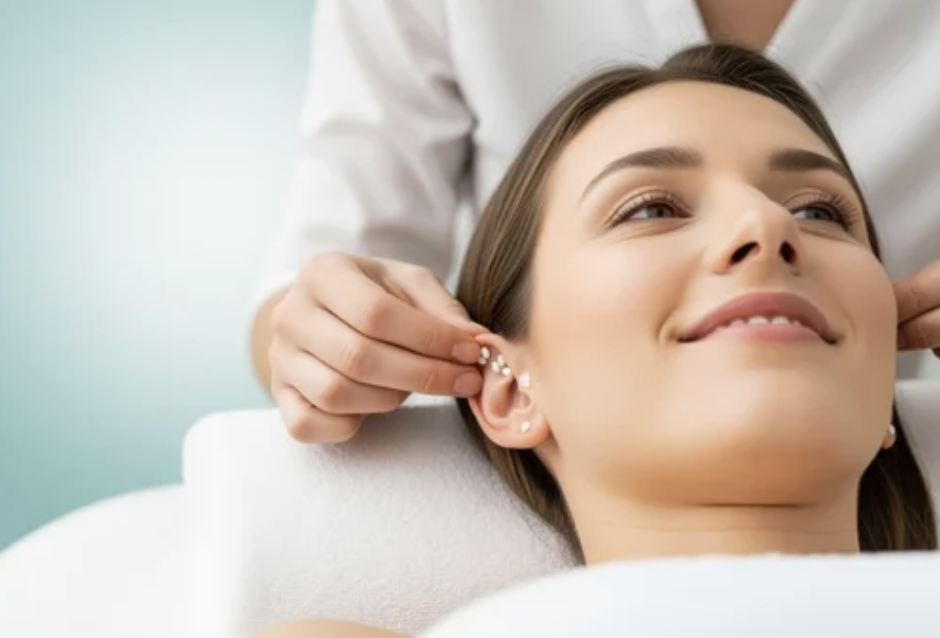
Auriculotherapy is a therapeutic technique inspired by Traditional Chinese Medicine and developed in Europe, which involves stimulating specific points on the ear.

The ear is considered a complete map of the human body: each area corresponds to an organ, a function or a region of the body.

👉 By stimulating these points (needles, seeds, laser or pressure), it is possible to act at a distance on various disorders.


🧠 How does auriculotherapy work?

Auriculotherapy is based on a close connection between the ear and the central nervous system.

Stimulating the ear points makes it possible:

  • to send signals to the brain
  • to regulate the nervous system
  • to rebalance certain physiological functions

👉 It acts in particular on:

  • stress and emotions
  • pain
  • hormonal imbalances
  • circulation

🌿 The benefits of auriculotherapy

💆‍♀️ Reducing stress and anxiety

Auriculotherapy helps calm the nervous system:

  • reduced stress
  • improved sleep
  • a feeling of deep relaxation

🔥 Pain relief

It may help to relieve:

  • neck and lower back pain
  • migraines
  • muscle tension

👉 Some people notice an improvement from the first sessions.


🌸 Hormonal and women’s health disorders

It may also be offered for:

  • premenstrual syndrome (PMS)
  • period pain
  • irregular cycles
  • fertility problems

👉 It aims to regulate the hormonal axis and reduce energy stagnation.


💧 Water retention and heavy legs

Auriculotherapy may help to:

  • improve circulation
  • reduce the feeling of heaviness
  • promote drainage

⚖️ Help with weight management and cravings

It can be used as a complement to:

  • regulate appetite
  • reduce food cravings
  • act on emotional stress

🎯 What are the main indications?

Auriculotherapy may be offered, alongside medical care, in many cases:

✔️ stress, anxiety, burnout
✔️ chronic or acute pain
✔️ digestive disorders
✔️ sleep disorders
✔️ hormonal imbalances
✔️ addictions (tobacco, sugar, food, screens)


🪡 What happens in an auriculotherapy session?

During a session at the practice:

  1. Personalised assessment (symptoms, constitution, cycle…)
  2. Detection of sensitive points on the ear
  3. Stimulation of the points:
    • very fine needles
    • or application of ear seeds

👉 The seeds help prolong the effect between sessions.


⏱️ How many sessions are needed?

It depends on the problem:

  • recent disorders: 1 to 3 sessions
  • chronic disorders: 3 to 6 sessions
  • hormonal support: regular follow-up recommended

📍 Auriculotherapy in Aix-en-Provence or Cadenet

I support you at my practice in Aix-en-Provence or Cadenet with a personalised approach based on the principles of Traditional Chinese Medicine.

Each session is adapted to your constitution and your goals:

  • pain relief
  • hormonal regulation
  • improved circulation
  • stress management
  • addiction

⭐ Why choose auriculotherapy?

✔️ Natural, gentle method
✔️ Minimally invasive
✔️ Complementary to acupuncture
✔️ Some people notice an improvement from the first sessions


🔑 Conclusion

Auriculotherapy is a solution that may help in rebalancing the body and relieving many disorders, particularly those linked to stress, pain and hormonal imbalances.

👉 An ideal approach if you are looking for natural, personalised treatment.